Clay soil — how to improve it without spending a fortune
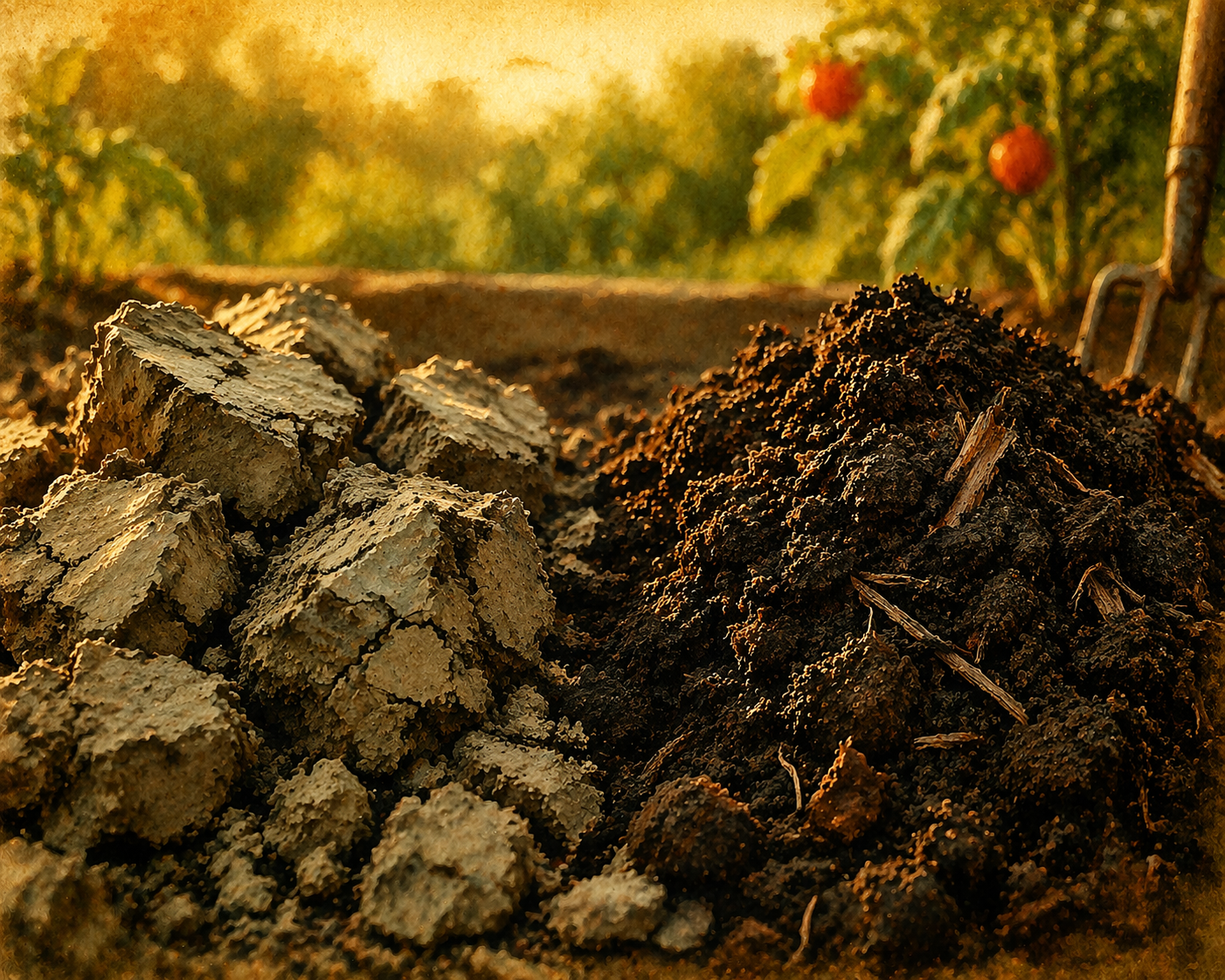
Clay soil — diagnosis and treatment
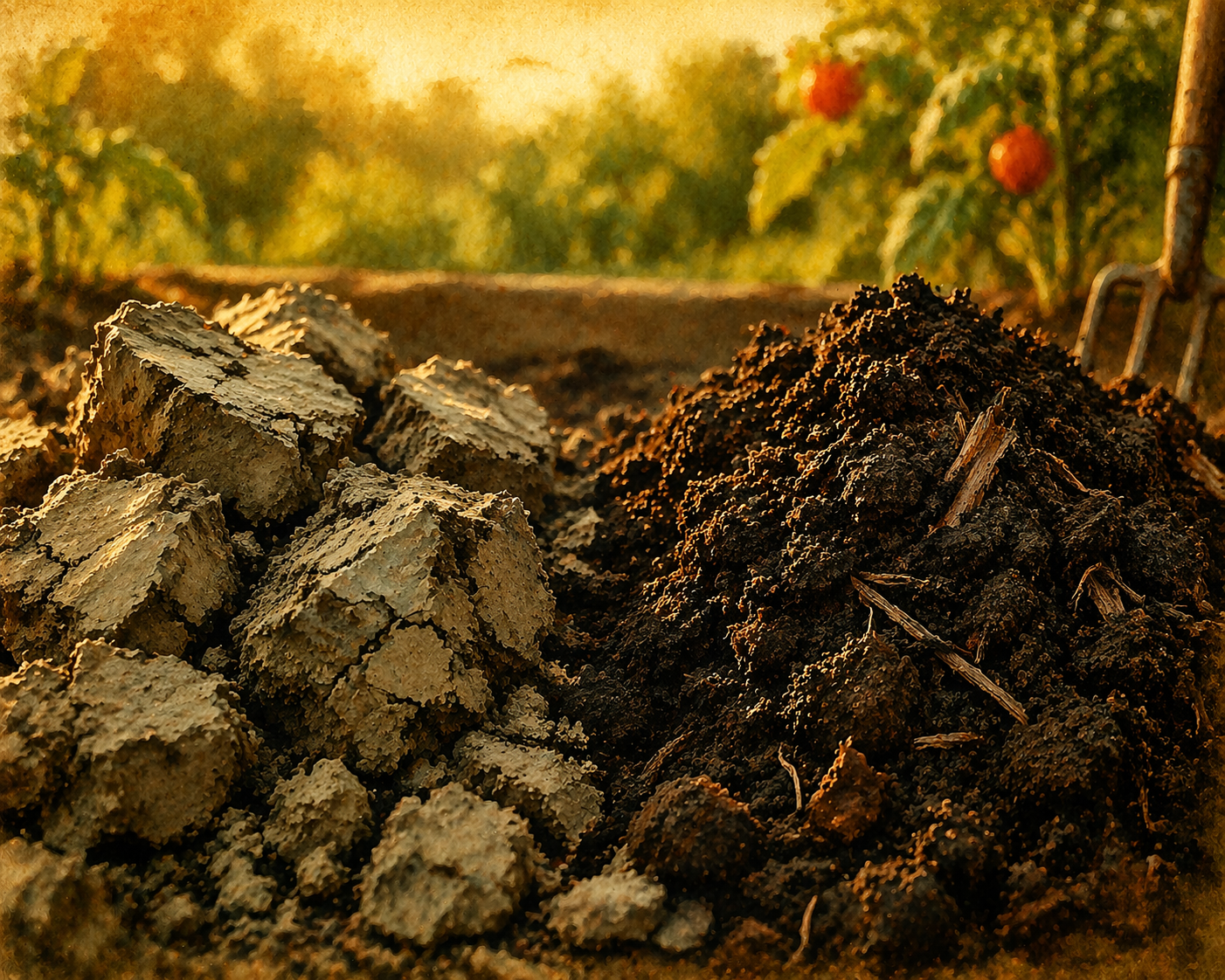
Can you form moist soil in your palm into a smooth ball without cracking? Clay soil. Advantages: retains water and nutrients. Disadvantages: compacts into blocks, hardens in drought, turns to mud in rain, suffocates roots.
What really works:
1. Compost — absolute priority
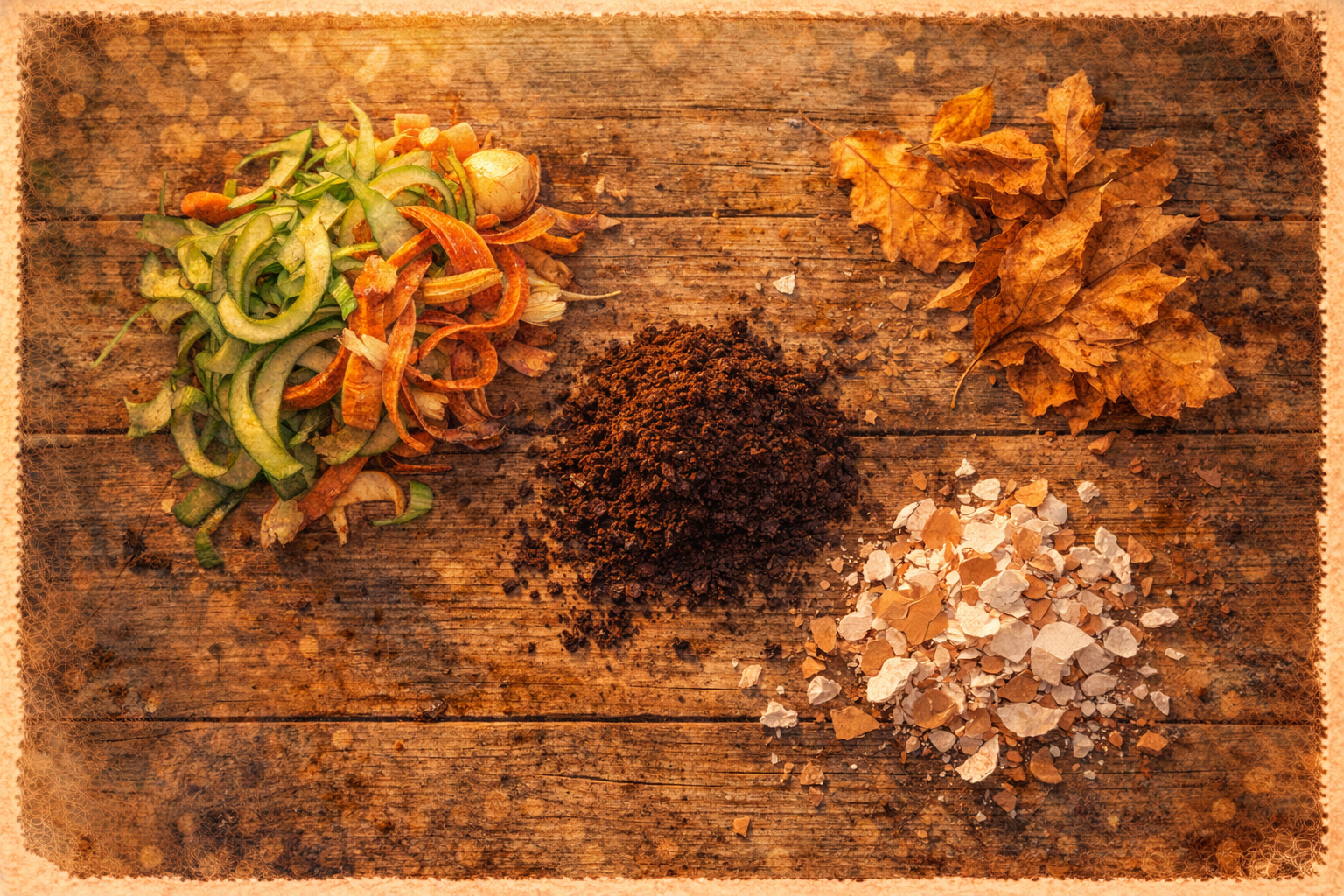
Apply 5–10 cm of compost to the surface annually and gently mix with the top layer. Microorganisms and earthworms do the rest. Results are visible after 2–3 seasons.
2. Green manure in autumn
Lupin, phacelia, rye — roots mechanically loosen the soil through winter.
3. Perlite or horticultural grit
Mix with the cultivation layer. Improves drainage immediately. Costs money, but the bed works better instantly.
What to avoid — important warning:
Adding sand alone without compost. Sand + clay without organic matter = something like concrete. Classic mistake that ends up worse than it started.
Don't walk on wet clay soil — one wheelbarrow pass over wet soil destroys the structure you've been building for entire seasons.
Realistic expectations: Clay soil improves over years, not in one season.
zielnamanufaktura.pl
Photo Gallery 3