Yellowing Leaves — 5 Most Common Causes and How to Tell Them Apart
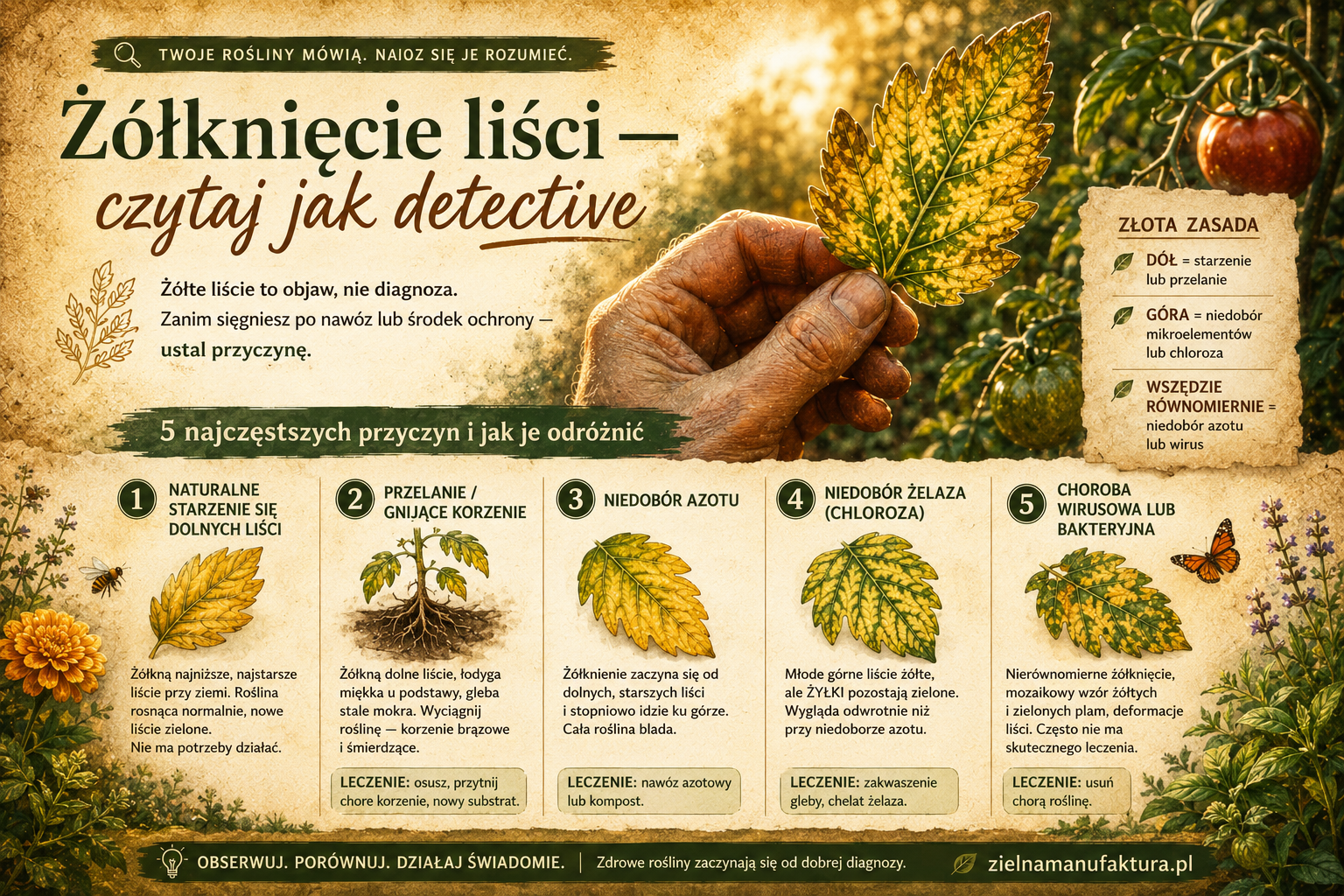
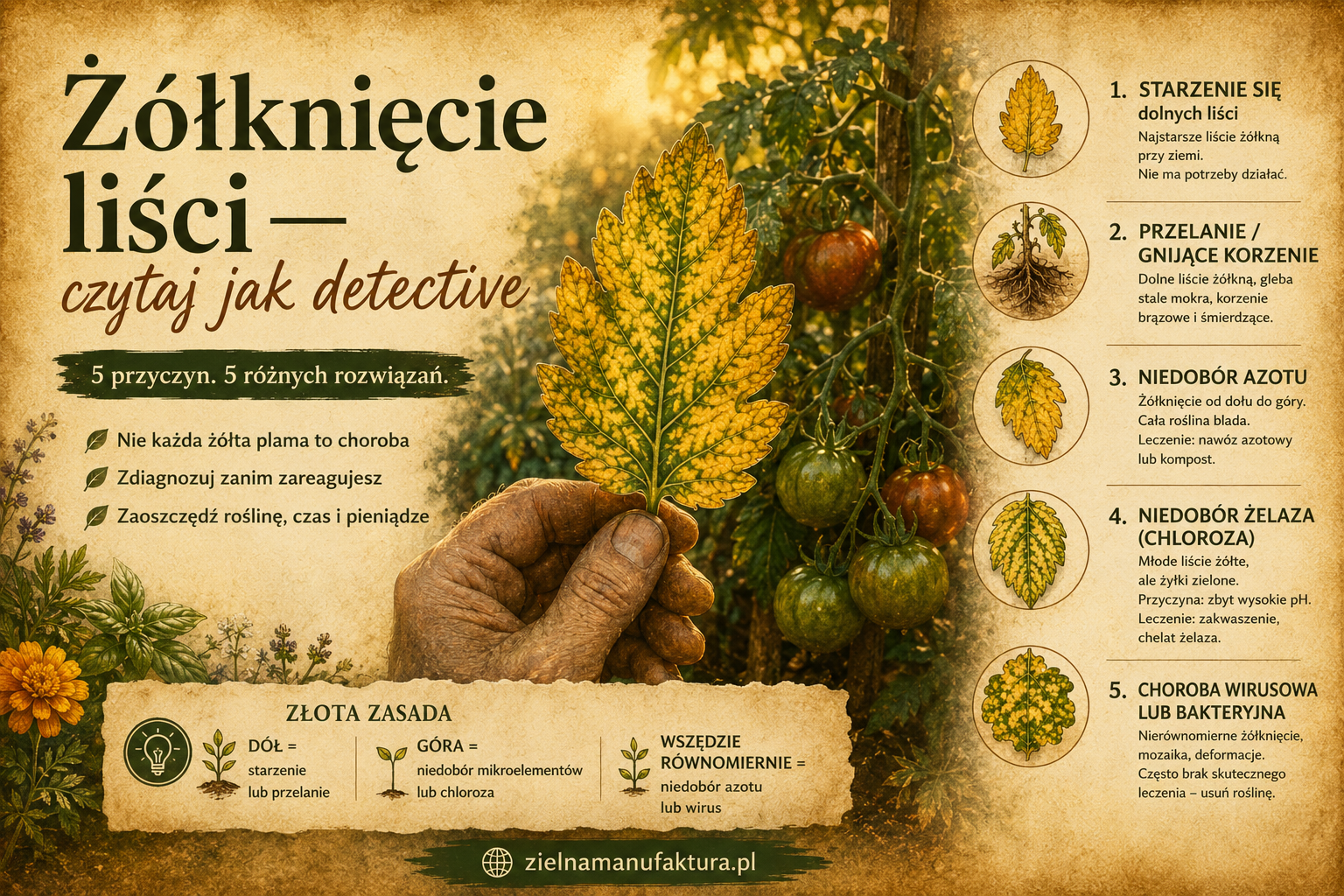
Yellowing Leaves — Read Like a Detective
Yellow leaves are a symptom, not a diagnosis. Before reaching for fertilizer or plant protection products — determine the cause.
5 most common causes and how to tell them apart:
1. Natural aging of lower leaves
The lowest, oldest leaves near the ground turn yellow. Plant growing normally, new leaves green. No action needed.
2. Overwatering / rotting roots
Lower leaves turn yellow, stem soft at base, soil constantly wet. Pull out the plant — roots are brown and smelly. Treatment: dry out, trim diseased roots, fresh substrate.
3. Nitrogen deficiency
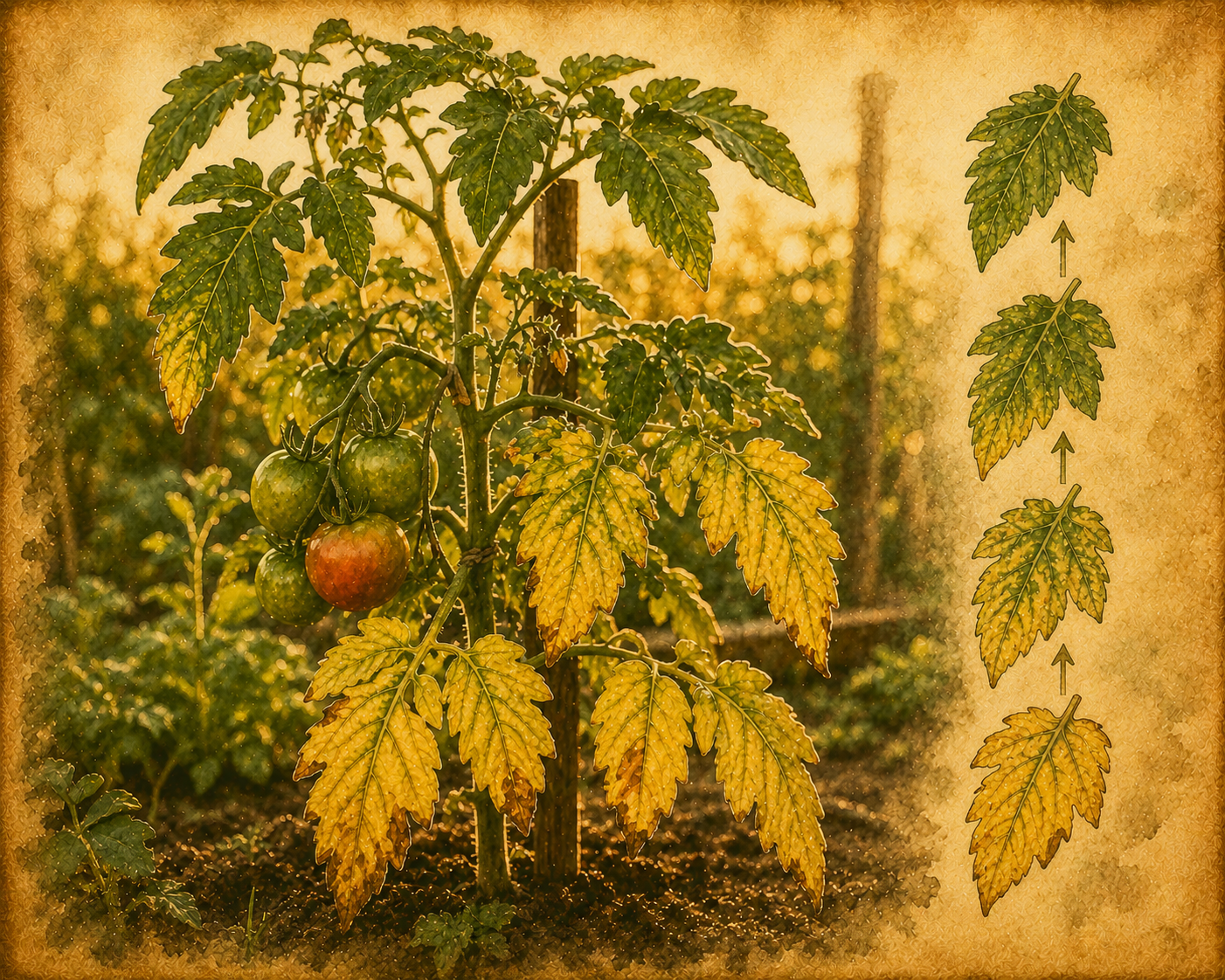
Yellowing starts from lower, older leaves and gradually moves upward. Entire plant pale. Treatment: nitrogen fertilizer or compost.
4. Iron deficiency (chlorosis)
Young upper leaves yellow, but VEINS remain green. Looks opposite to nitrogen deficiency. Most common cause: soil pH too high. Treatment: acidification, iron chelate.
5. Viral or bacterial disease
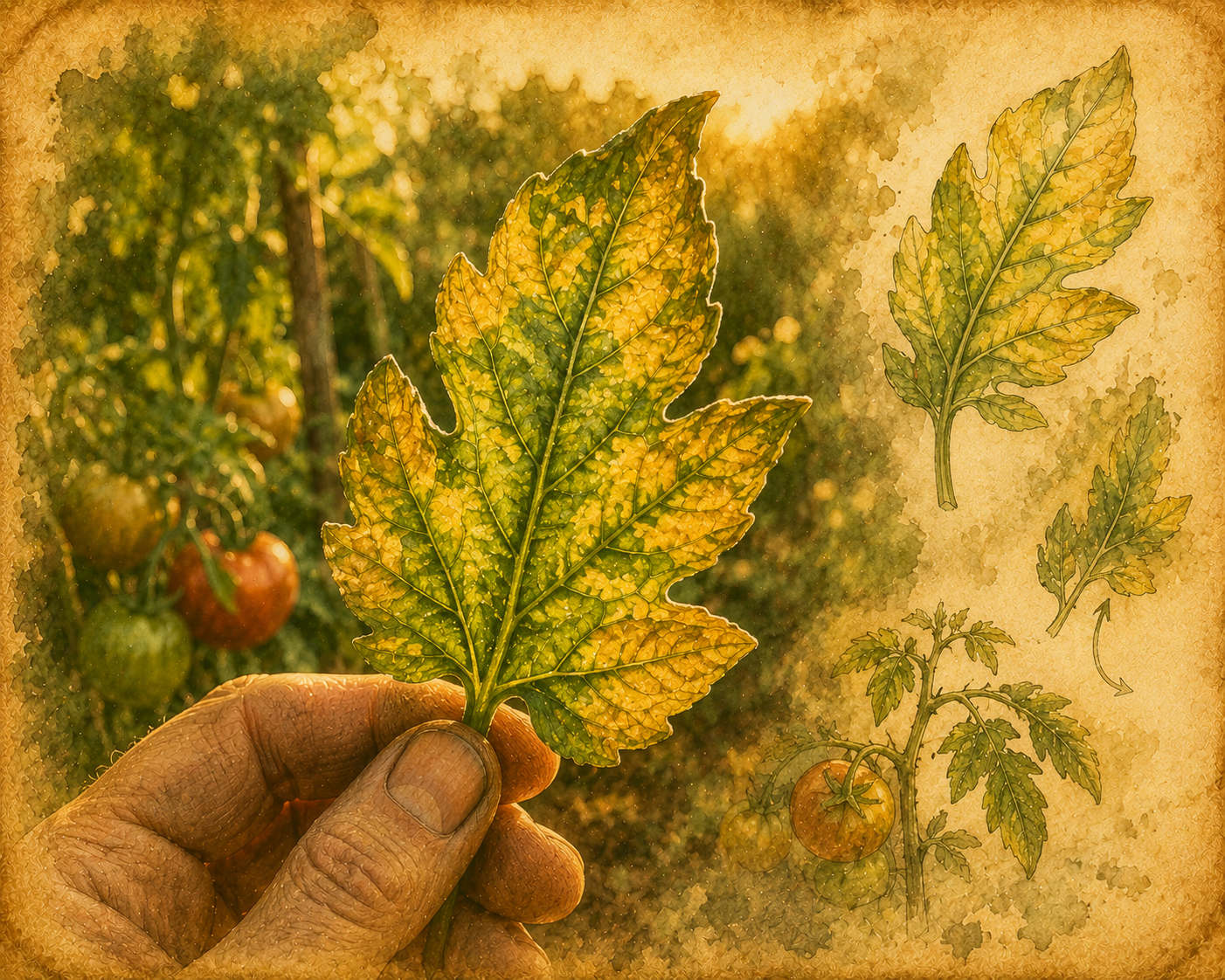
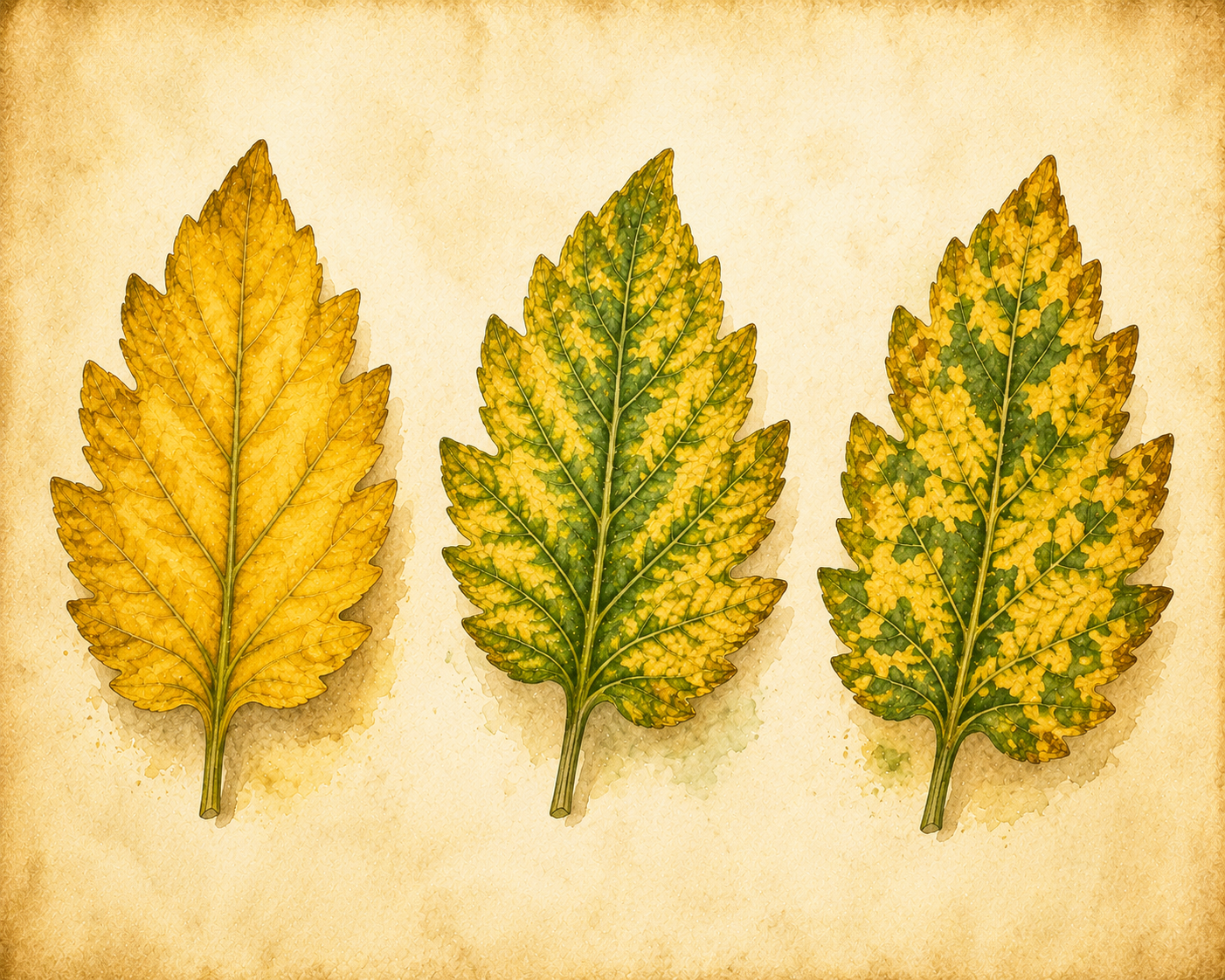
Uneven yellowing, mosaic pattern of yellow and green spots, leaf deformations. Often no effective treatment — remove diseased plant.
Golden rule: Where on the plant does it yellow? Bottom = aging or overwatering. Top = micronutrient deficiency or chlorosis. Evenly everywhere = nitrogen deficiency or virus.
zielnamanufaktura.pl
Galeria de Fotos 4