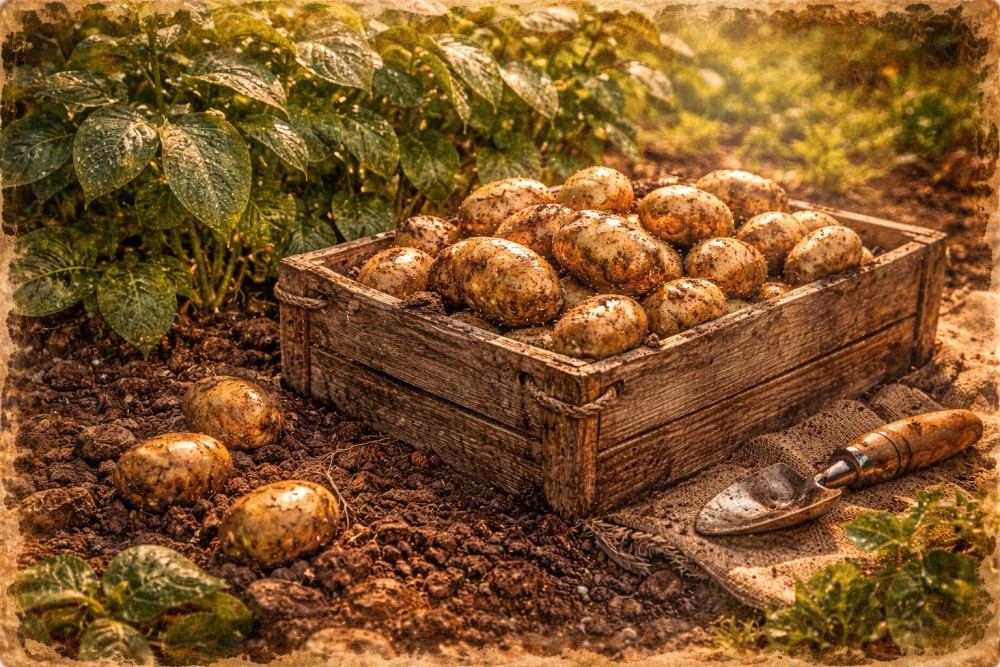
When and How to Plant Potatoes? Complete Guide for Allotment Gardeners
Learn when to plant potatoes (min. 8-10°C soil temperature), how to carry out chitting, how deep to plant and how to protect your crop against potato blight.
MarekZ
When to Plant Potatoes? Dates Worth Knowing
The potato is a patient plant — but not entirely. If you plant it too early in cold, wet soil, the tuber will simply rot. If too late — you'll lose part of the season and yield. The sweet spot is soil temperature of at least 8–10°C at 10 cm depth, which in Polish conditions means roughly the second half of April.
In practice, allotment gardeners often use a simple rule: plant when forsythia blooms. This is of course a mental shortcut, not a dogma — but forsythia usually blooms precisely when soil reaches the right temperature. It's worth having a cheap soil thermometer handy — it costs pennies and eliminates guesswork.
Those who plant too early lose the tuber. Those who wait for warmth — harvest the crop.
Chitting — Preparing Tubers for Planting
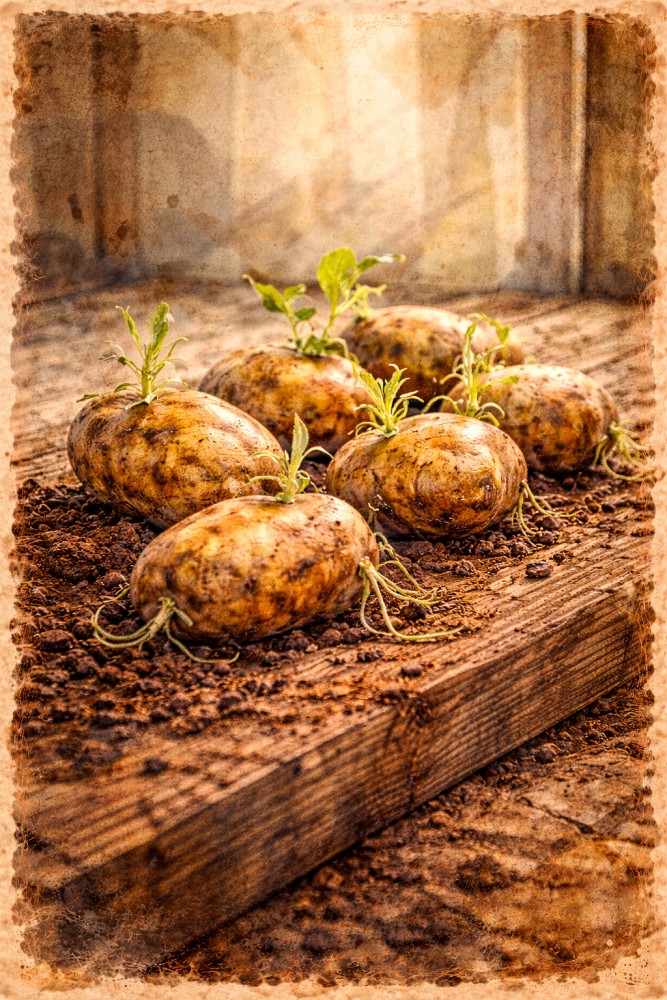
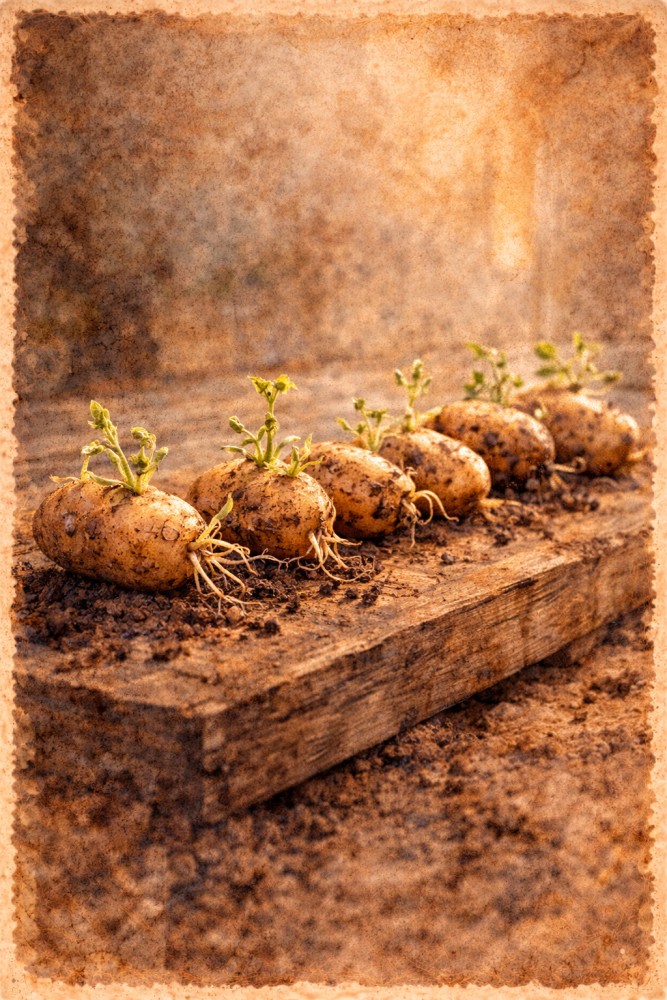
Chitting (pre-sprouting) involves laying out seed potatoes in a bright, cool place (8–15°C) for 3–4 weeks before planned planting. The goal is to stimulate shoots to grow before placing the tuber in soil.
Practically, it looks like this: in mid-March you take tubers out of the box, spread them in a single layer — with eyes (indentations) facing up — on a windowsill, in the garage, in the shed. After 2–3 weeks the shoots reach 1–2 cm in length and the seed potato is ready to go into the ground.
Chitting shortens the time to emergence by 1–2 weeks and evens out emergence — instead of random patches of greenery, you get an even carpet of leaves across the entire row.
Chitting shortens the time to emergence by 1–2 weeks and evens out emergence — instead of random patches of greenery, you get an even carpet of leaves across the entire row.
How to Plant Potatoes — Depth, Spacing, Orientation
Three parameters that have a real impact on yield:
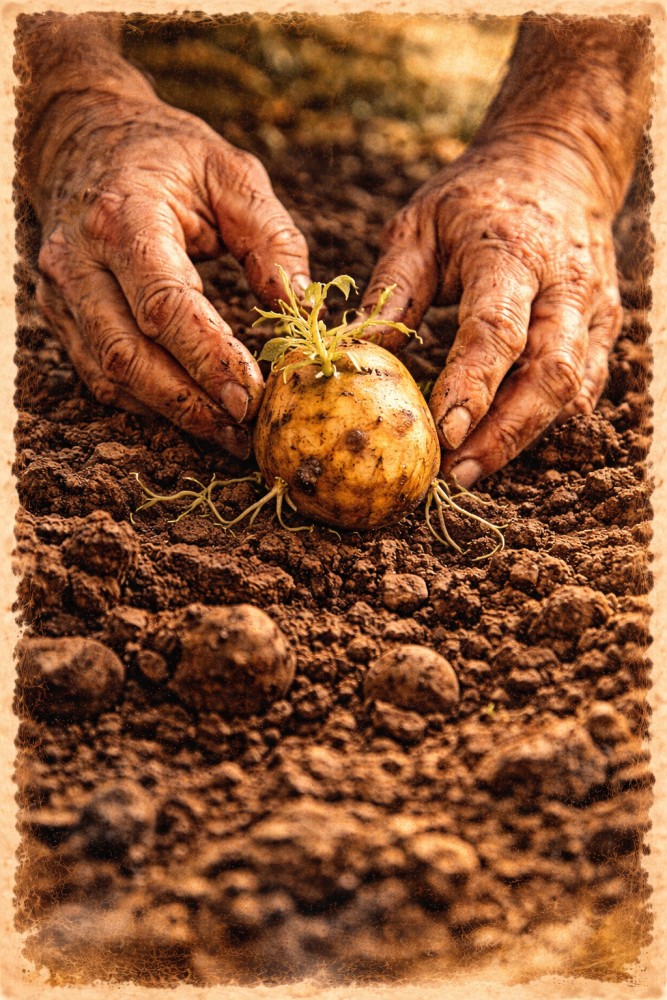
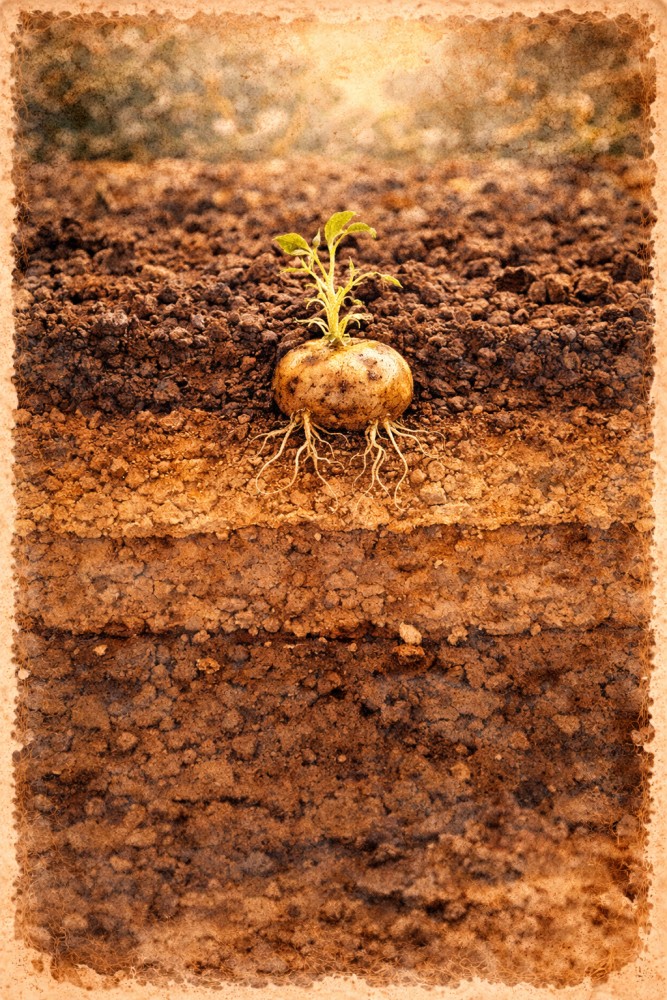
Depth: 10–15 cm
Too shallow — tubers turn green from sun exposure and become toxic. Too deep — the plant takes a long time to break through the soil. Optimal: 10–12 cm for heavy soils, 12–15 cm for light and sandy ones.
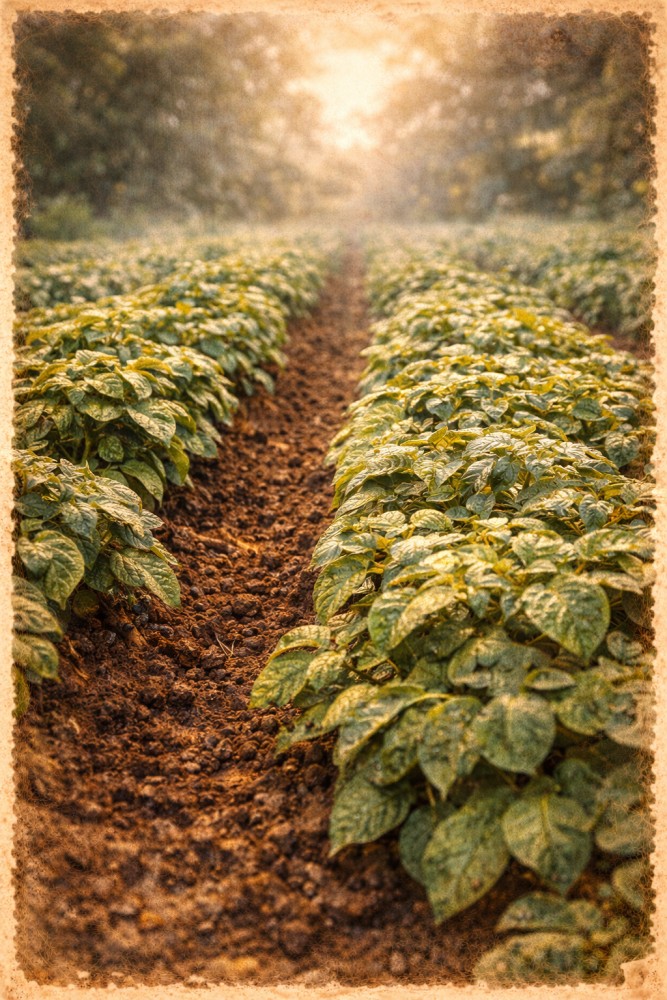
Spacing: 30–40 cm in rows, 60–75 cm between rows
Early varieties plant slightly closer together (30 cm), late ones — farther apart (35–40 cm), because they form larger bushes. Wide spacing between rows isn't wasteful — it's space for earthing up and free air circulation, which reduces blight risk.
Shoot orientation: facing up
Plant shoots with eyes facing up. If a tuber ends up with eyes facing down, the plant will manage anyway, but it will lose a few precious days turning the shoot around — and with early varieties, every week is worth its weight in gold.
Early and Late Varieties — How They Differ
The division is simpler than it seems:
Early varieties (Denar, Arielle, Lord, Vineta) are harvested from the end of June to mid-July. Tubers are delicate, skin peels under a fingernail, they're perfect for boiling in their jackets. They don't store long — you eat them in season.
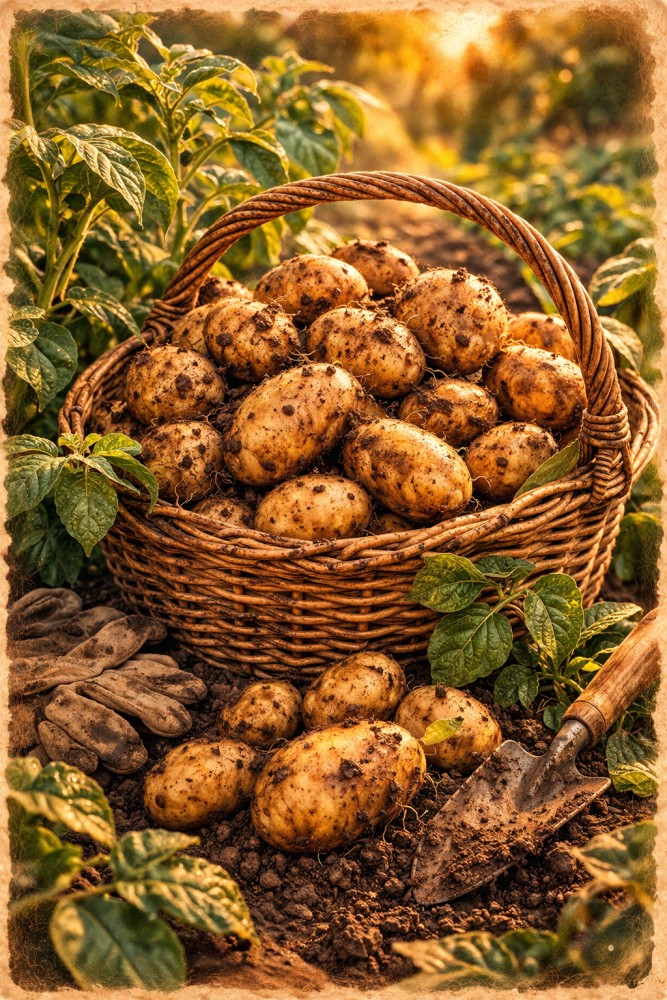
Late varieties (Irga, Innovator, Jelly, Rywal) mature from September to October. They have thick skin, store well in the cellar throughout winter. These are the ones you plant with storage in mind, not for new potatoes with butter and dill.
On the allotment it's worth having at least some of both — early ones for regular cooking in summer, late ones for autumn and winter.
Earthing Up — Why and When
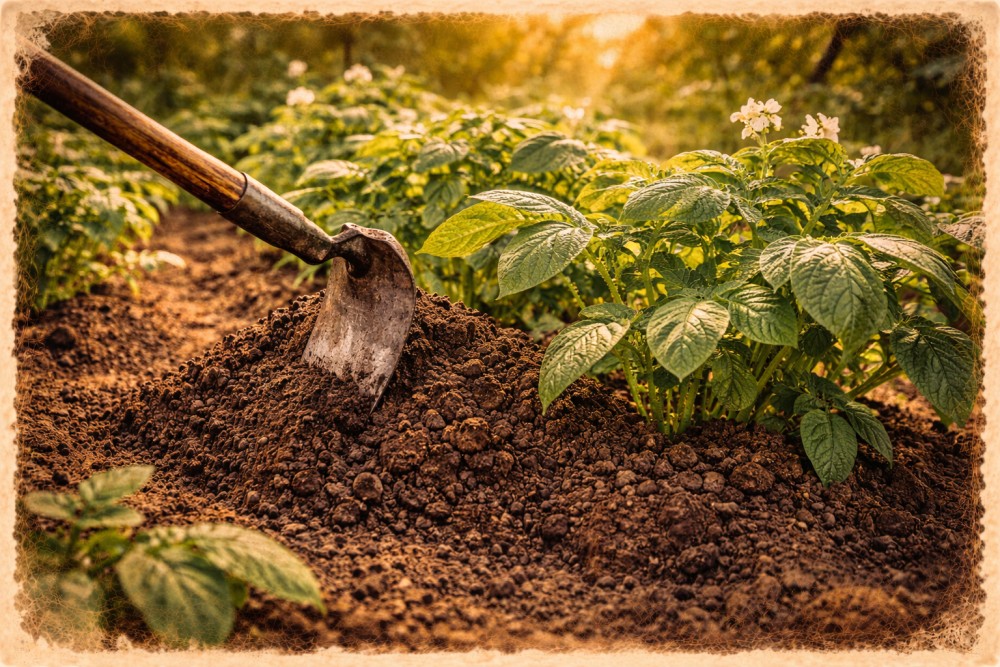
Earthing up means covering plants with soil when they reach 15–20 cm height. It's repeated 2–3 times per season.
Two reasons why it's worth doing:
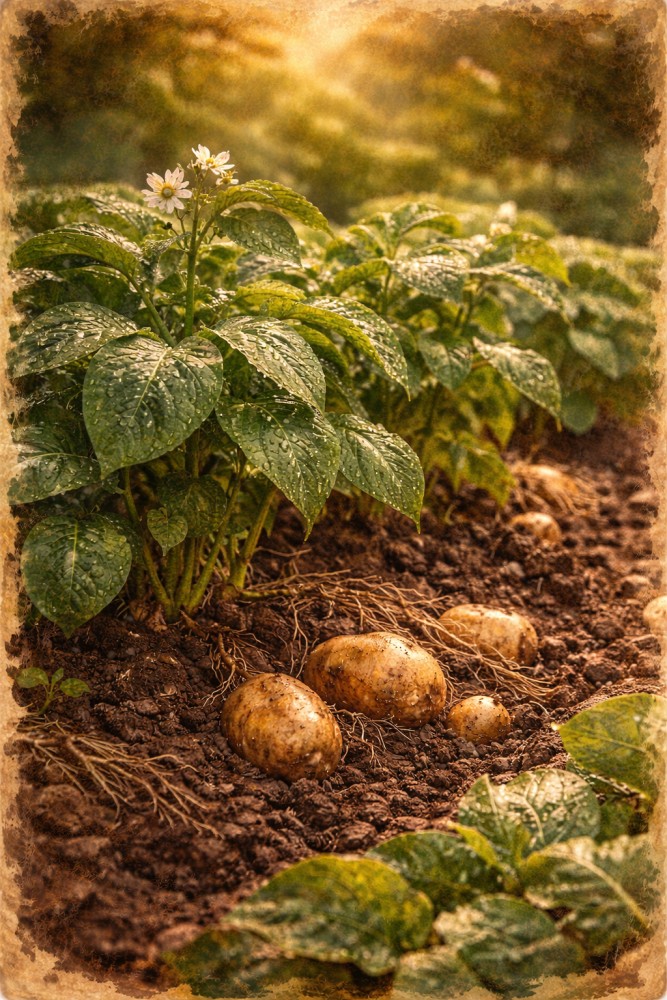
First — new tubers form on underground stems (stolons). The longer and deeper the mound of soil around the plant, the more space for tubers and the greater the yield. Second — earthing up covers any exposed tubers, which turn green in light and produce solanine.
Practically: use a hoe, draw soil from both sides of the row toward the plant, leaving the leaf tips visible. Don't bury the entire plant — just its base.
Protection Against Potato Blight — Prevention
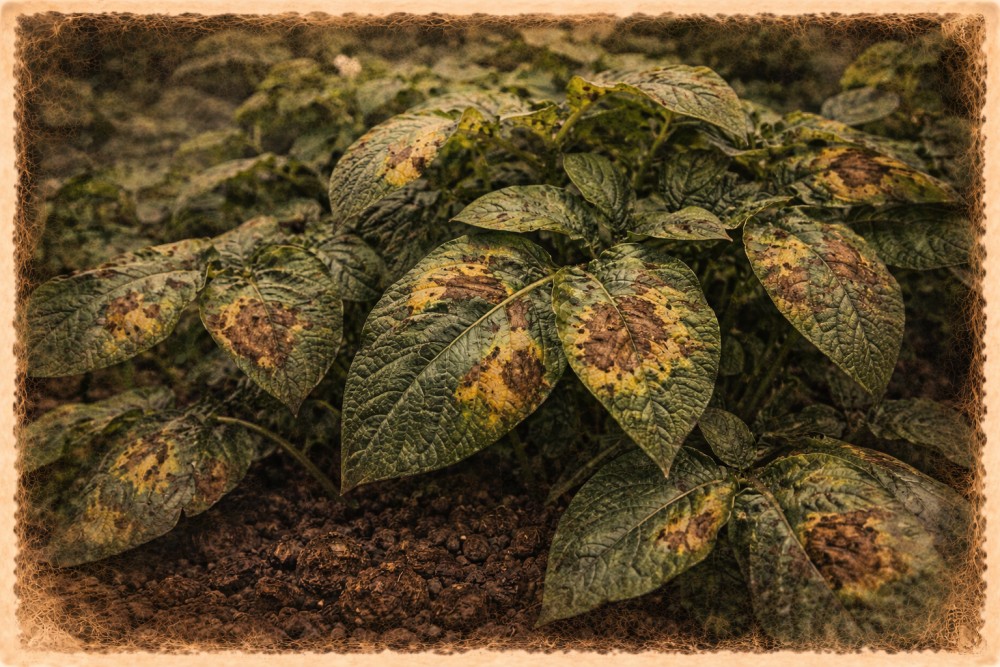
Phytophthora infestans, or potato blight, is one of the allotment gardener's most dangerous enemies. The fungus spreads by wind and water, favored by warm (15–22°C), humid nights and fog. In Poland, the highest risk season is July and August.
Chemical-free prevention:
- Wide spacing — air circulation slows fungal development
- Morning watering, not evening — leaves have time to dry before night
- Avoiding overhead watering — less moisture on leaves
- Choosing resistant varieties (e.g., Jelly, Sarpo Mira)
If you notice the first brown spots with yellow borders on leaves — act quickly. Copper-based preparations are permitted on allotments (e.g., Cuproflow, Miedzian). Apply sprays preventively, before disease appears — when disease has already attacked, you can only slow its progress, not stop it.
Cut infected foliage and remove it from the allotment — don't compost it. Spores survive in soil for several years.
Potato in the ZielnaManufaktura App
If you're managing your garden with the ZielnaManufaktura app, potato has its complete profile — planting dates, care tips and reminders adapted to the Polish climate. It's also worth recording planting and earthing up dates in your diary — this makes it easier to assess which varieties performed best on your patch of land after harvest.
Photo Gallery 10
Comments 0
No comments yet. Be the first!