Blossom end rot — why tomatoes rot from the flower end
Коротко: Black or brown bottom on tomato fruit is blossom end rot — not a fungal disease, but calcium deficiency. Usually results not from lack of calcium in soil, but from irregular watering.
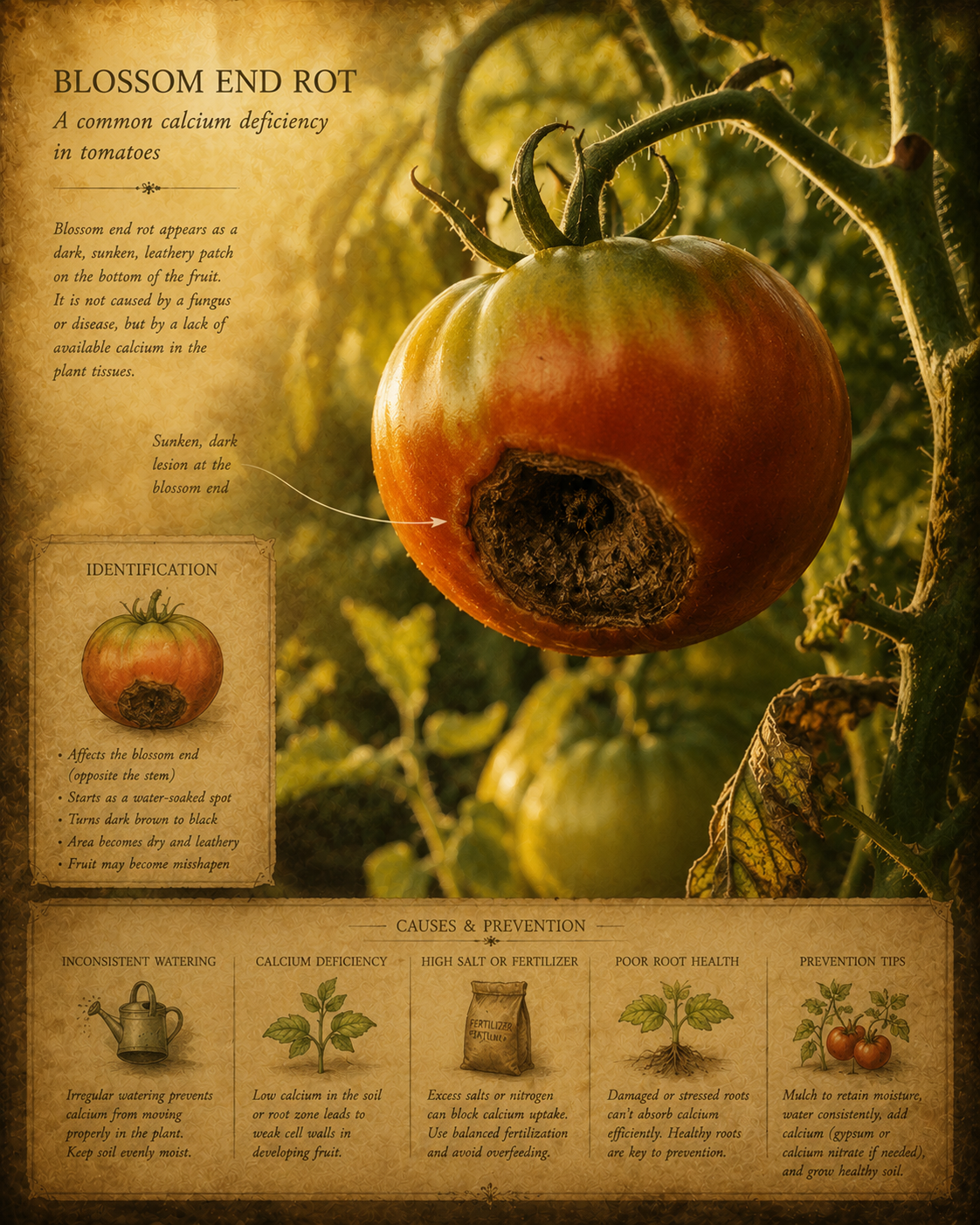
Blossom end rot — it's not a fungus, it's a watering problem
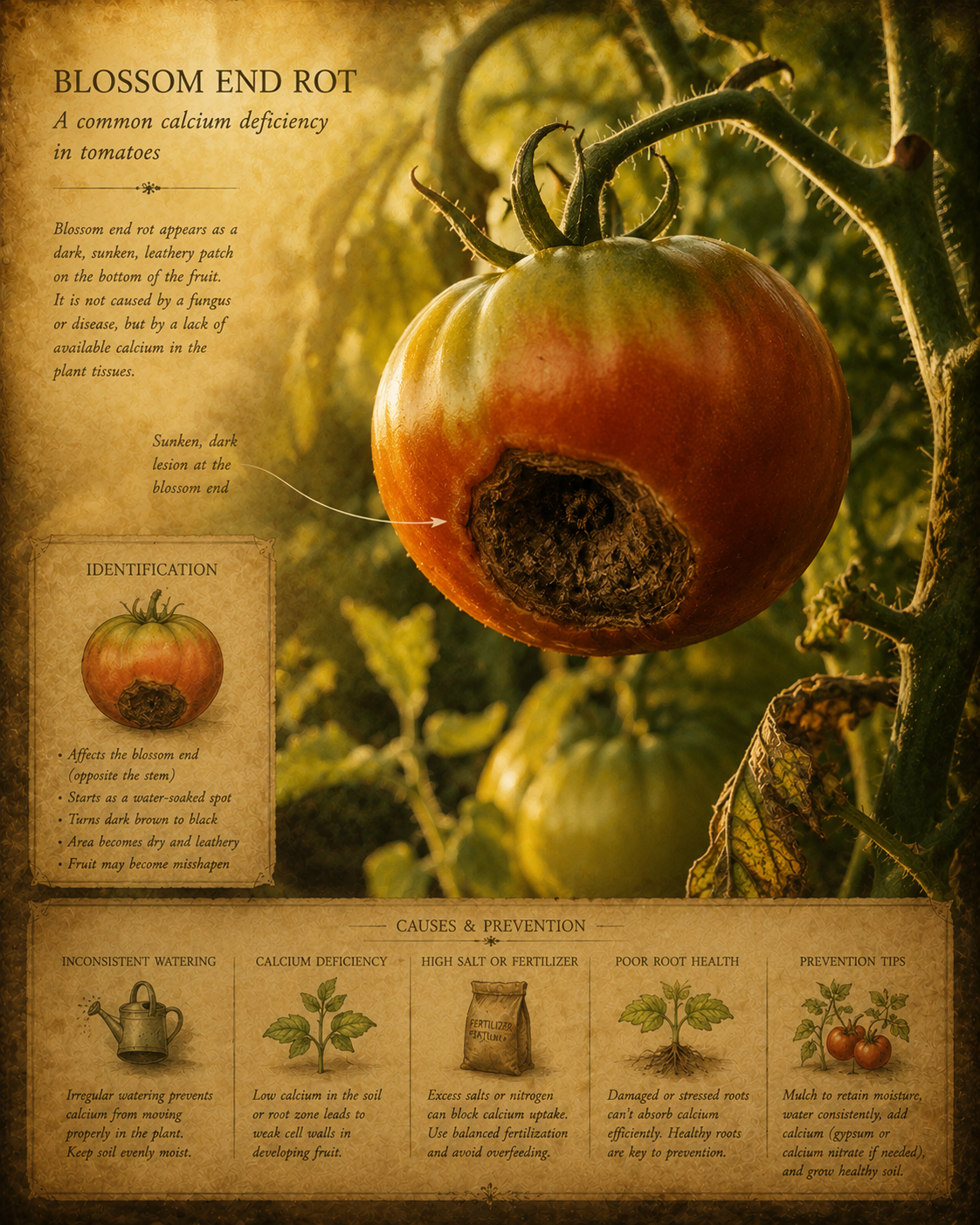
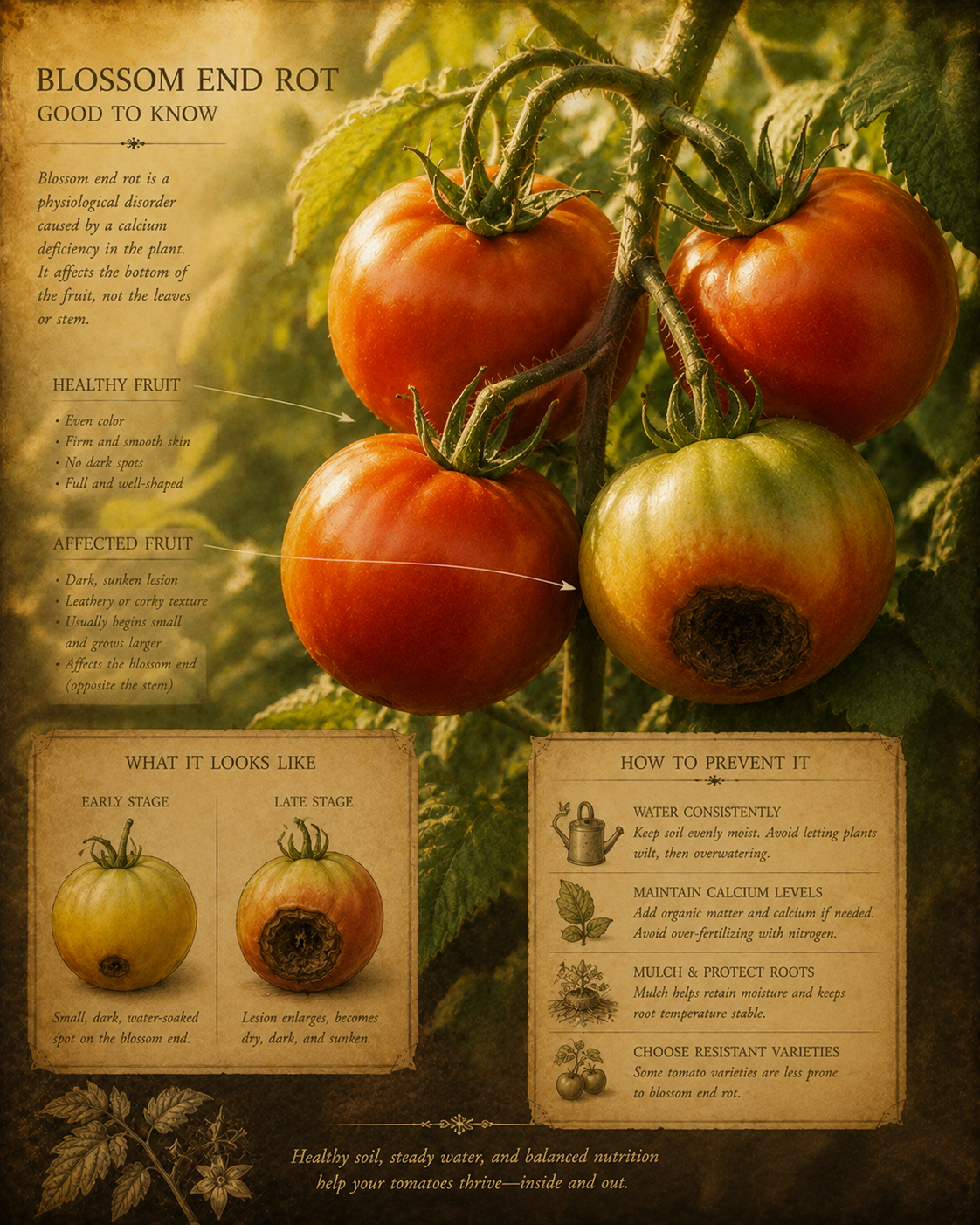
A beautiful tomato, ripening on the bush. And suddenly: a black, sunken bottom on the fruit. This is blossom end rot.
What it is and where it comes from:
This is a physiological calcium deficiency in the fruit tissue. Not a disease, not a fungus, not a pest. Calcium is transported through the plant only when regular water flows. Irregular watering = irregular calcium transport = blossom end rot.
Most common causes:
- Irregular watering (large fluctuations in soil moisture)
- Too acidic soil pH (< 6) — calcium is in the soil, but the plant can't absorb it
- Root damage (mechanical or from overwatering)
- Too much nitrogen fertilizer — the plant grows faster than it absorbs calcium
What to do:
- Even out watering — consistent soil moisture is essential
- Check and correct soil pH (optimal for tomatoes: 6–6.8)
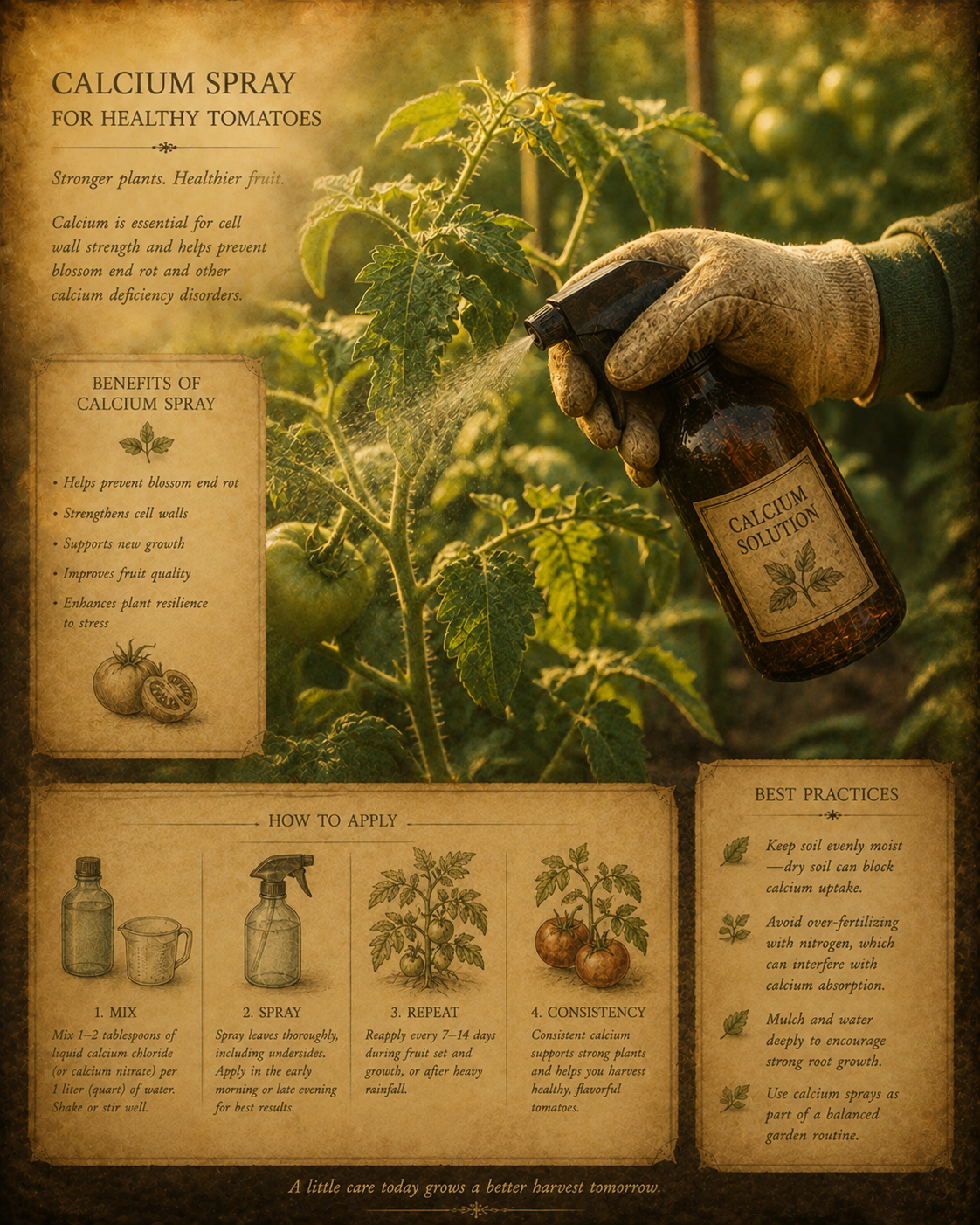
- Foliar spray or watering with calcium solution (available at garden centers)
- Mulching — stabilizes soil moisture
You can't save affected fruits — harvest and discard them. But you can prevent further ones.
zielnamanufaktura.pl
Фотогалерея 3