Mulching — the laziest and best thing in the garden
Коротко: A layer of mulch reduces weeds, retains moisture and improves soil. One action — three benefits. And requires less work throughout the season than regular weeding.
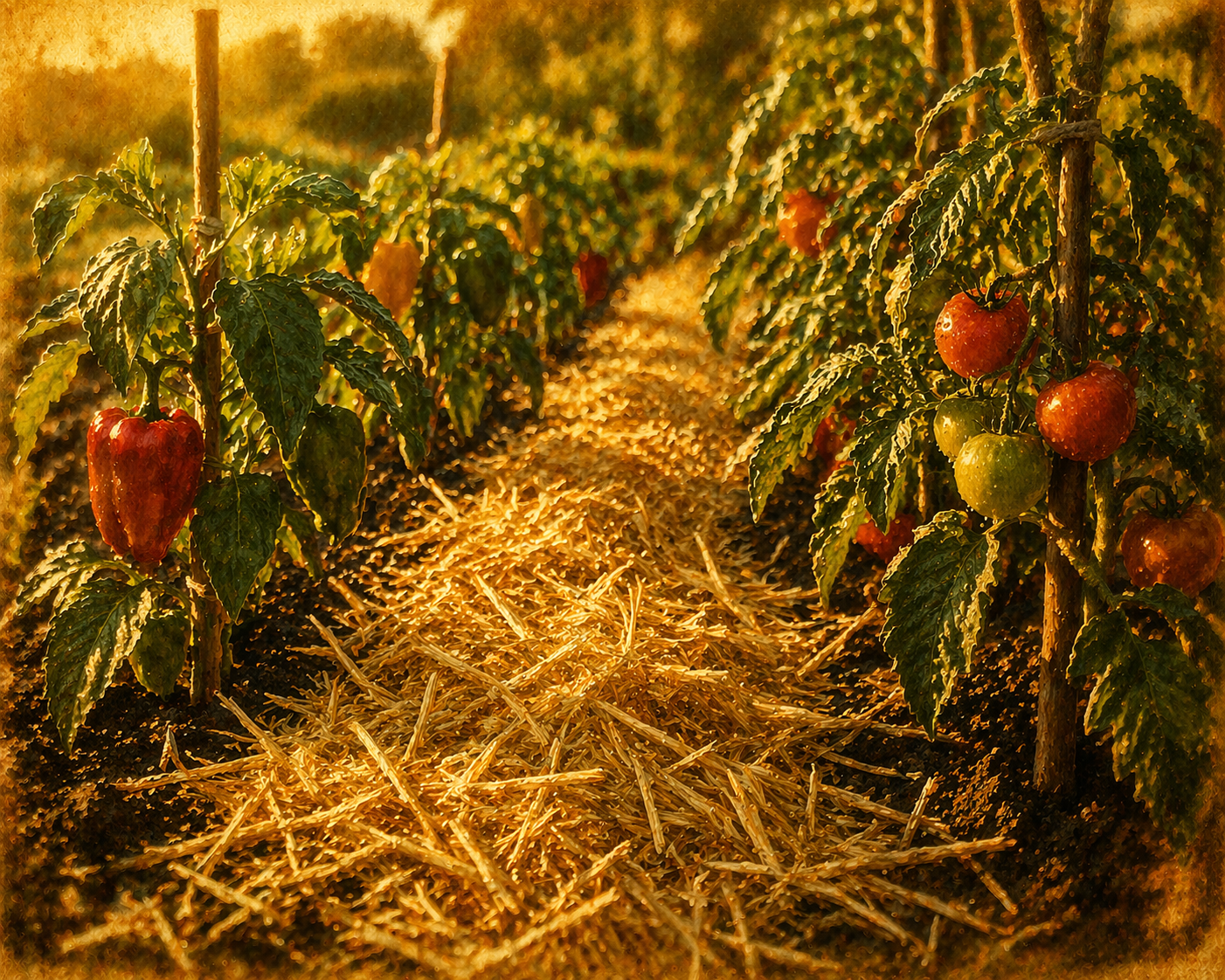
Mulching — one action, three problems less
You put a layer of organic material on the soil between plants. And you almost don't have to do anything else.
Three benefits at once:
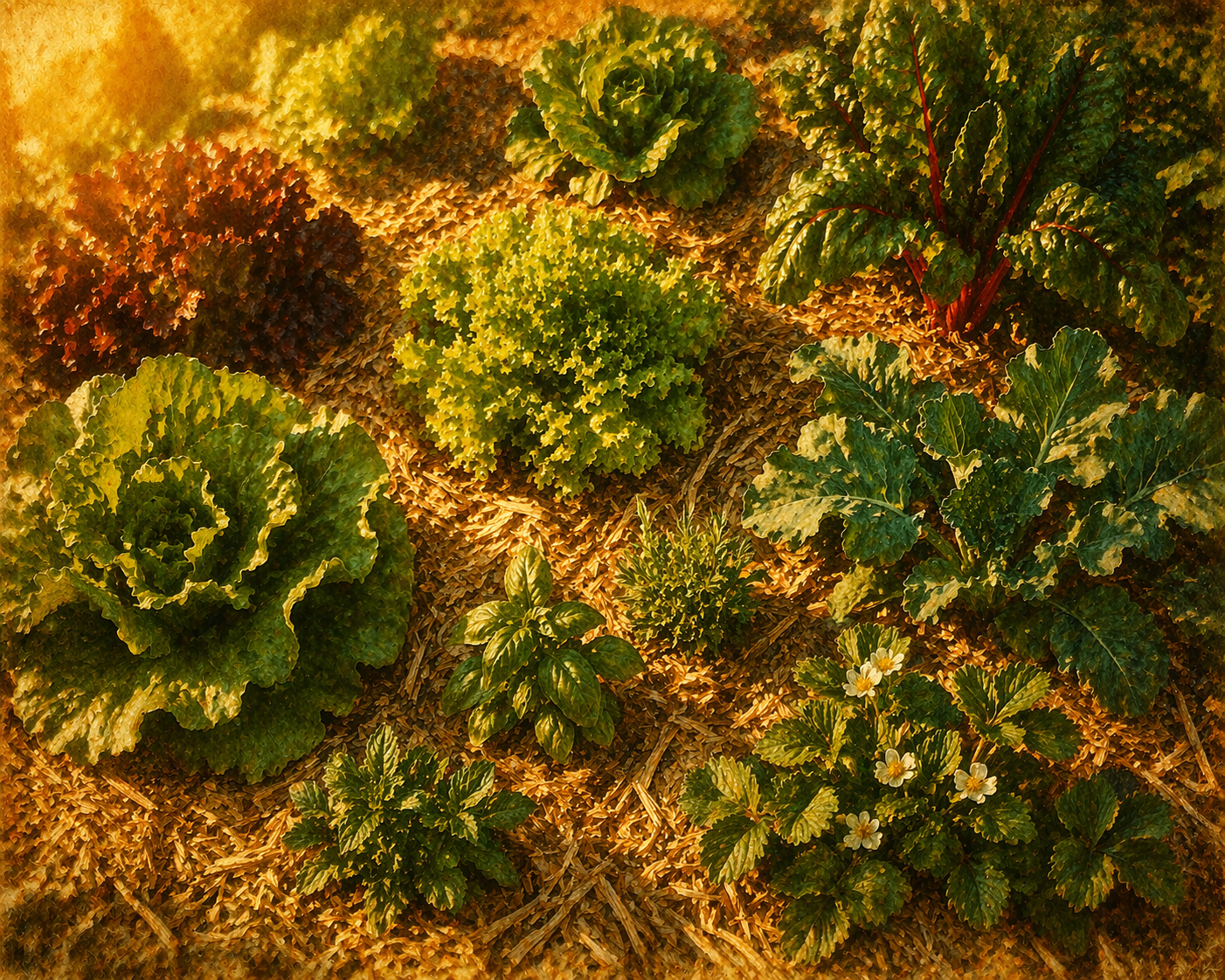
- Fewer weeds — a 5–10 cm layer limits light access to weed seeds. It doesn't eliminate them completely, but dramatically reduces weeding.
- Less watering — mulch reduces water evaporation from soil by 30–50%.
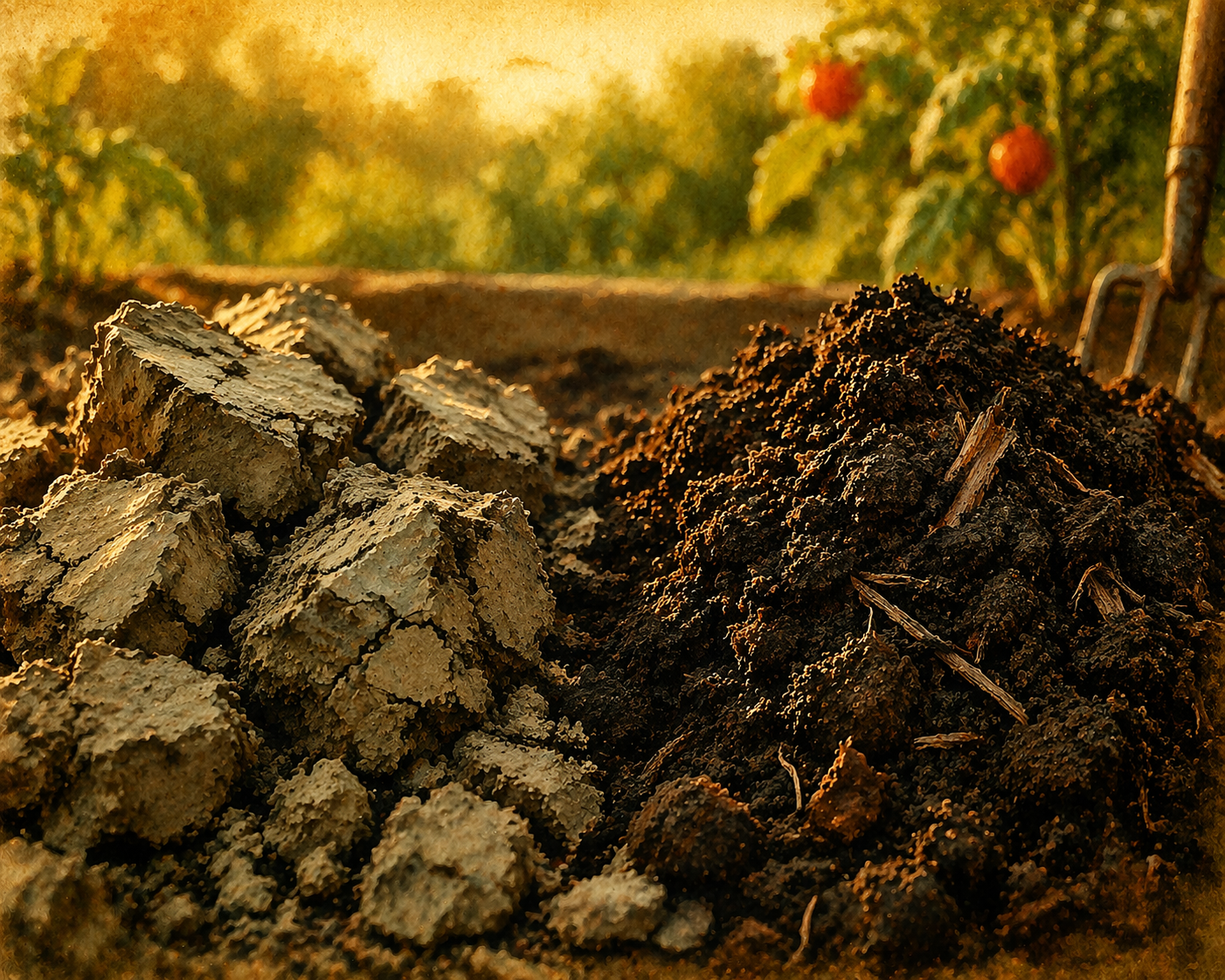
- Better soil — organic mulch decomposes and enriches the soil. You're making compost in-situ.
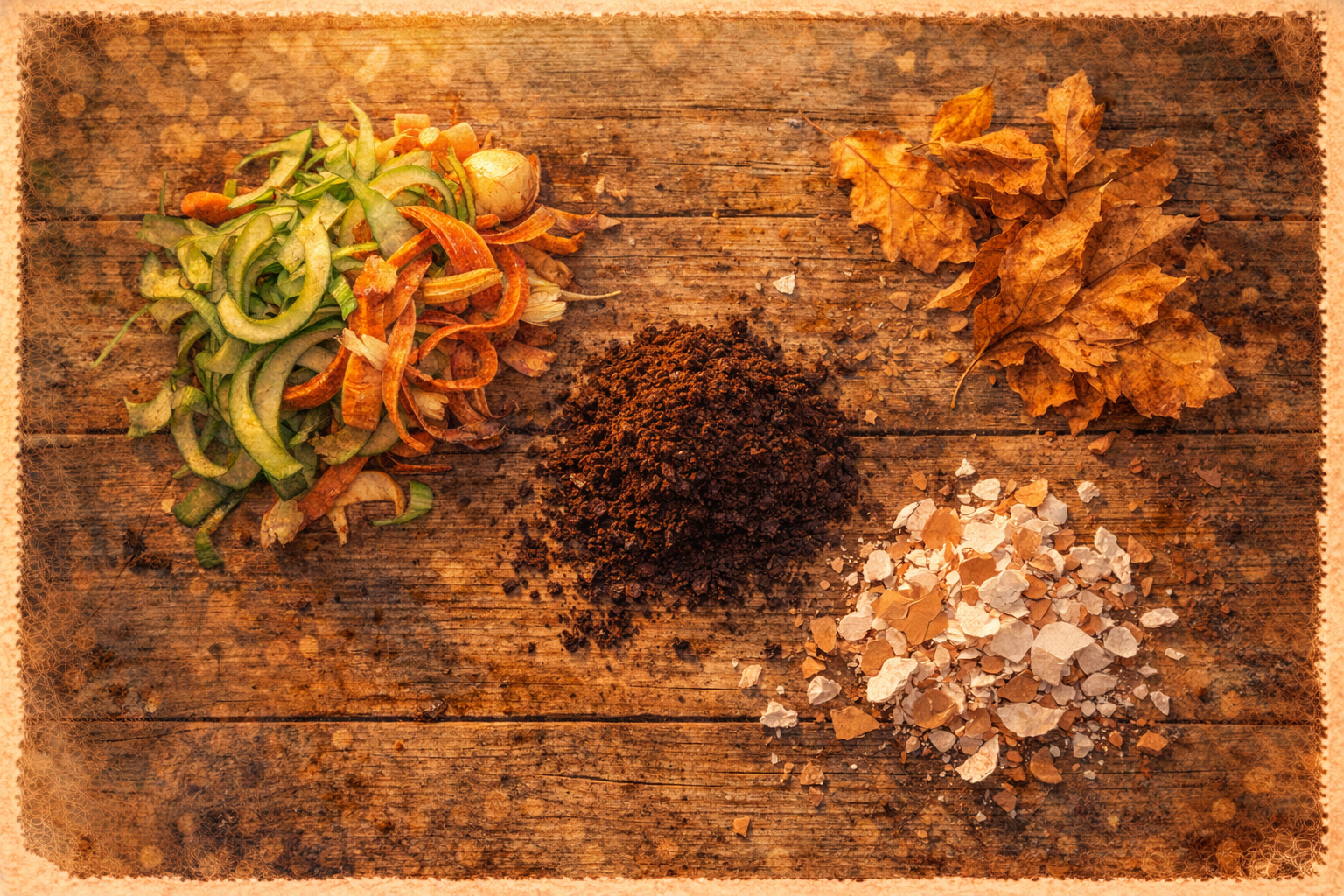
Types of mulch:
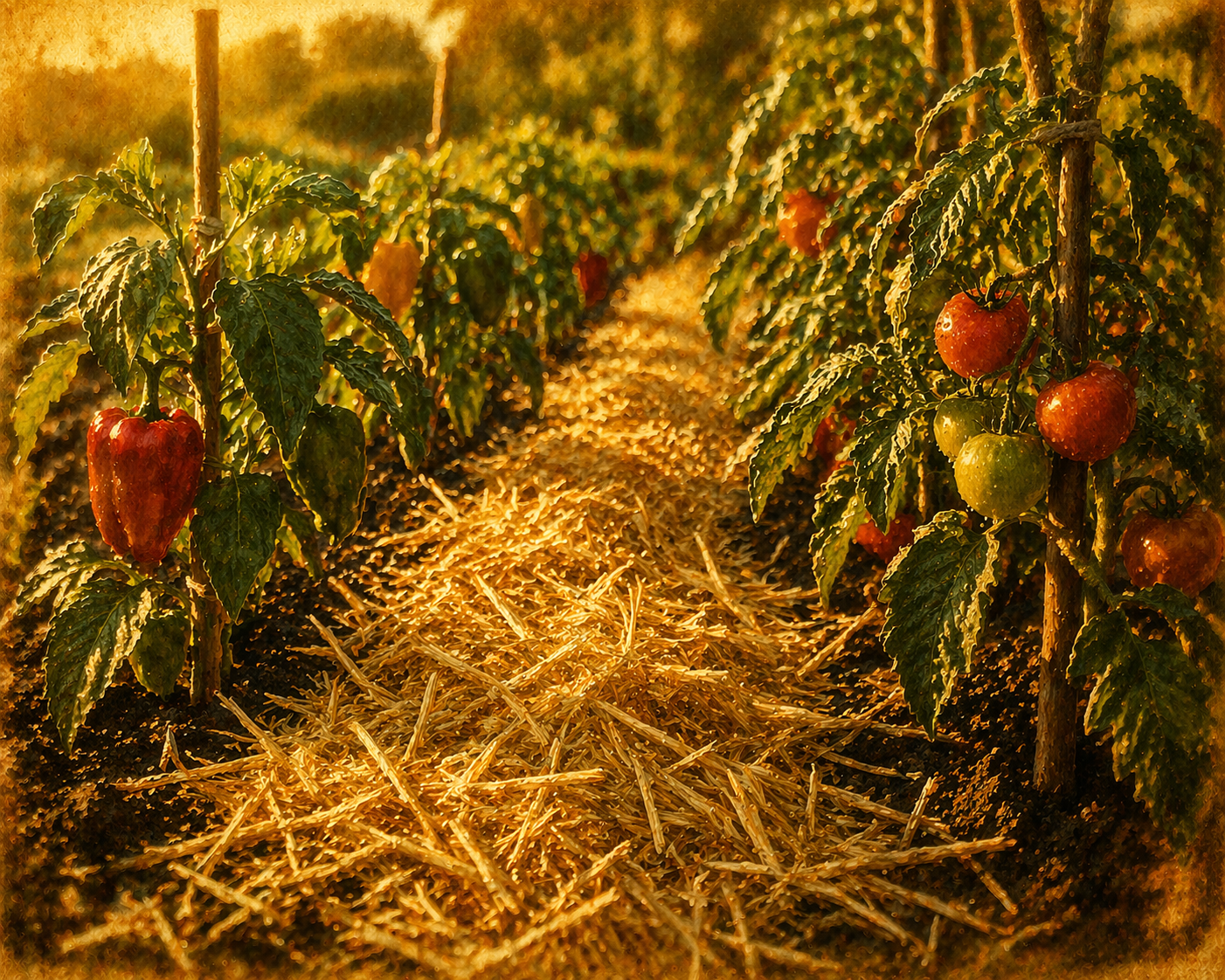
- Straw — classic for tomatoes and strawberries, cheap
- Grass clippings — free, max. 5 cm layer (too thick ferments and smells)
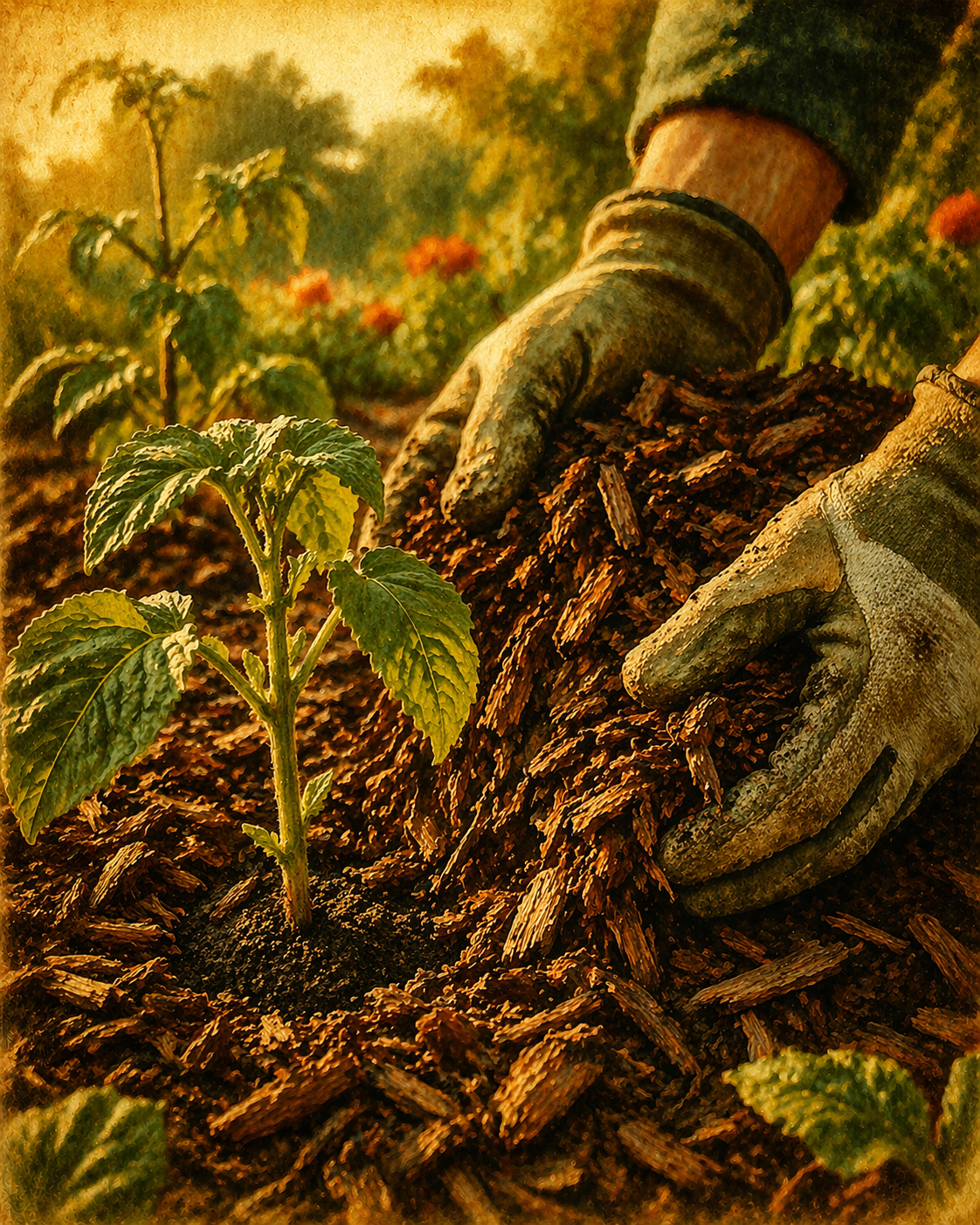
- Coarse wood bark — decorative, durable, good for shrubs and trees
- Dry leaves — free, decompose slowly
- Landscape fabric — effective against weeds, but doesn't improve soil
Important rule: Mulch doesn't touch plant stems — leave 5–10 cm space around each plant. Otherwise rot at ground level.
When to mulch: In spring when soil warms up. In summer as protection against drought. In autumn as winter cover.
zielnamanufaktura.pl
Фотогалерея 3