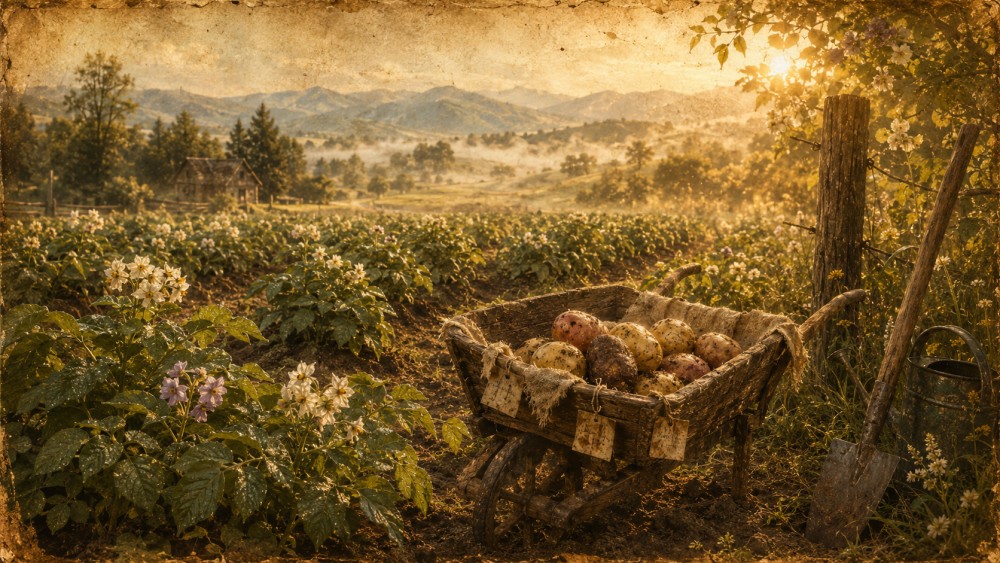
1800 varieties, one potato. Reading "Polityka" and thinking what's in it for the hobbyist
In the April issue of "Polityka" weekly (no. 18/2026 from April 28), the text "Hot Potatoes" appeared — a very critical commentary on the state of the Polish potato, its export, quality, and research background. Most of the article concerns commercial agriculture and agricultural policy, but several threads are also important for the hobbyist with a plot, balcony, or small vegetable garden. We select five such threads and show what they might mean for a person who plants potatoes more for themselves than for the market.
MarekZ
Paradox to start with: 1800 varieties, one on the shelf
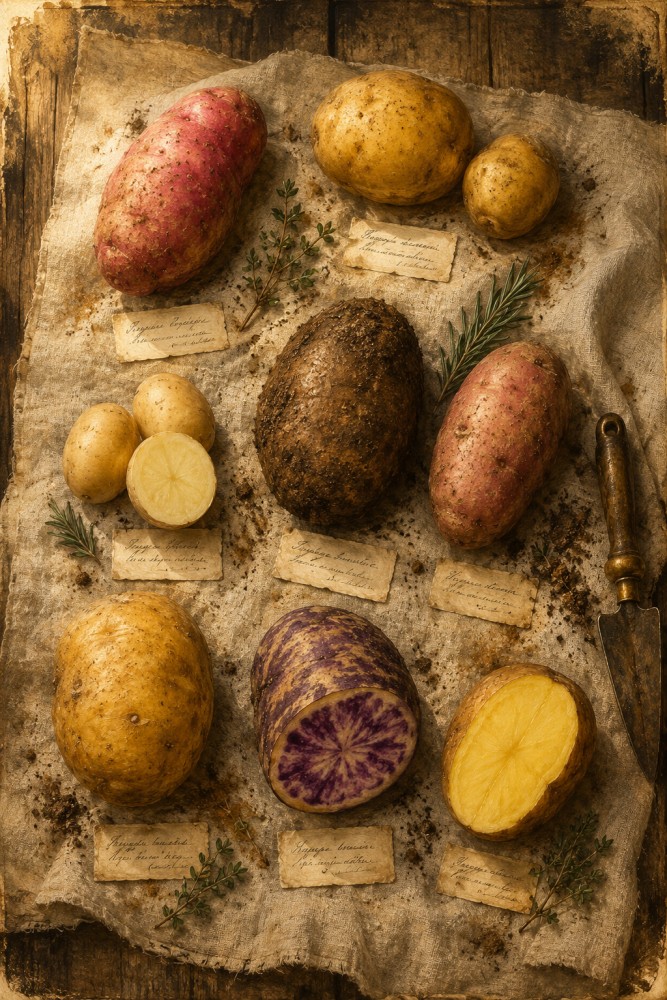
The gene bank at the Plant Breeding and Acclimatization Institute in Radzików holds about 1800 potato varieties. The oldest one that can be reproduced dates back to 1893 — a variety called Marius, bred in the Prussian partition. In a typical discount store's offer, we usually find one item: potato. No name, no culinary type, no information about its use. "Potato brand potato," as one of the characters in the "Polityka" article puts it.
This paradox summarizes the entire conversation about Polish potatoes. We have richness that we don't use. Knowledge that we don't pass on. And a market that rewards uniformity and punishes diversity. The hobbyist is a less market-significant character in this story, but paradoxically the most free — because they don't have to play this game. They can choose a variety, buy certified seed potatoes, and see on their own patch of land what will grow from it.
1. Certified seed potatoes — an expense that makes sense
The most striking fragment of the "Polityka" article: it's estimated that about 70 percent of Polish potatoes come from the so-called underground economy — from non-certified seed potatoes that farmers keep from the previous season. These are potatoes whose phytosanitary condition no one has checked. They may carry ring rot — a disease that in Europe persists practically only in Poland and Romania and is one of the main reasons why Polish potatoes stopped being eagerly bought in the West.
For the hobbyist, the conclusion is simple and concrete. Certified seed potatoes cost more than those "from a neighbor," but they give what nothing else can: certainty that the plant starts healthy. According to information from the article, good quality seed potatoes can be reproduced from your own harvest for about two seasons — later the variety begins to "degenerate," loses character, picks up pathogens. After two years, it's worth replacing the material. This is a one-time small investment that has great significance for what will grow from the bed over the season.
This is also a small, everyday gesture of support for Polish breeding. Plantations in Strzękocin or in Zamarte near Chojnice, which offer healthy seed potatoes of new varieties, have — as we read — problems finding customers. The hobbyist who reserves a package of certified material in spring is at the end of this chain the one for whom all this is done.
2. Salad, general purpose, floury — classification that didn't catch on, but makes sense
The Polish Potato Association once proposed a simple classification of raw material: type A (salad, low starch, firm flesh), type B (for cooking, universal), type C (floury, rich in starch, for pancakes, dumplings, kartacze, potato babka). It didn't catch on in trade. But in home cooking and your own vegetable garden, this division is simply useful.
If you're planning a few rows of potatoes on your plot, it's worth deciding what kind of hobbyist you are. Do you mainly make salads and potatoes boiled in their skins? Choose a type A variety. Do you fry pancakes, like kartacze, make homemade kopytka? Type C. A bit of everything? Type B. It's the same effort in cultivation, but a completely different effect on the plate. "Potato brand potato" is nothing precisely because it doesn't know what it wants to be.
This is also the fastest way to start distinguishing varieties in practice. You plant two rows of different types, cook them the same way, check the difference. Knowledge that a book can't give, a bed can give.
3. Varieties worth knowing
The "Polityka" text mentions several specific names worth noting. Werbena and Piwonia as early varieties. Jurek and Bielik — considered by scientists from the Institute as the best for pancakes. Meluzyna and Hetman — potatoes mashed from them don't darken, so they're perfect for kopytka. Longina — bred in Zamarte, excellent for homemade fries (and bought by Germans and Dutch, so it's worth knowing it before all of Europe discovers it). Marius — historical curiosity from 1893, supposedly slightly bitter, but worthy of attention as a fragment of Polish agricultural heritage.
You won't find these names in discount stores. You'll find them in breeding farms, in selected nurseries, and from certified seed potato suppliers. This is the moment when the hobbyist beats the mass market: spends ten minutes on research, calls the breeding farm, orders a variety that no one in the area has. This isn't heroism, it's simply a choice that a commercial farmer doesn't have time for.
4. Climate changes what and how we plant
A thread that returns year after year in every conversation about cultivation. According to the article, already about a quarter of potato crops in Poland require irrigation — a number showing how much conditions have changed over the last decade. Shorter vegetation period, unexpected frost returns in May, two-month summer droughts or conversely — wet years favoring potato blight. This is the new normal, for which most currently planted varieties weren't designed.
The Institute in Bonin crosses consumer traits (taste, flesh color, starch content) with drought resistance, wet summer tolerance, or short vegetation period adaptation. Varieties better adapted to what we already have outside our windows are emerging. The hobbyist experimenting on a small scale is an ideal testing ground for these varieties — because losses from an unsuccessful season are limited, and conclusions about what works can be noted and passed on.
For our part, we help in Zielna Manufaktura recognize these conditions before they become a problem: weather forecast with alerts warns about night frosts and extremes, and the sowing calendar is calibrated to Polish realities, not to a general European template.
5. A disease worth fearing. Or at least knowing
Ring rot is a disease that Poland hasn't been able to get rid of for years. "Polityka" puts it plainly: its source is unverified seed potatoes circulating locally. A hobbyist who plants material bought "from someone in a neighboring village" or keeps their own potatoes year after year will sooner or later introduce something to their garden that can't be easily removed later.
The second layer of the same problem is recognizing symptoms in time. Potatoes get sick from many things — from potato blight, through scab, to viruses. The scanner in the Zielna Manufaktura app helps take the first step: take a photo of a leaf or tuber and get a hint about what it looks like. This won't replace the diagnosis of an experienced gardener, but allows taking action sooner rather than later. In the case of ring rot, "later" usually means "too late."
Instead of a summary
The "Polityka" text is a sharp, sometimes journalistically confrontational commentary about what happened to the Polish potato at the level of market, export, and agricultural policy. We look from a different side — from the perspective of a small bed, a few bags on the balcony, a ten-meter row on a plot.
And from this side, the picture is less dramatic. The hobbyist isn't doomed to "potato brand potato." They can once a season buy certified seed potatoes of a specific variety, plant them according to local conditions, observe what happens, and note conclusions. They can distinguish types A, B, and C, plant for their dishes, share seed potatoes with neighbors. They can thus, on a small scale, do exactly what was missing from the market — keep alive the knowledge that researchers from Bonin and Zamarte keep in their collections.
In Zielna Manufaktura, we want to help with this as best we can. A database of plants tested in Polish conditions, sowing calendar, weather alerts, cultivation diary where you can record what was planted and how it turned out, and a scanner helping recognize disease before it spreads through the bed. The app works in a browser at zielnamanufaktura.pl, and the Android version is in closed beta. We're looking for testers — every tester gets lifetime Premium and a place in the Founding Testers section in the app. Just go to zielnamanufaktura.pl/download.
And the original "Polityka" article — we highly recommend it. Even if you don't agree with its entire diagnosis, you'll be left with better questions. In our kitchen and in our garden, that's usually enough for something to start changing.
Comments 0
No comments yet. Be the first!