How to read substrate composition from the bag — NPK, peat, perlite
Kort samengevat: Garden substrate labels look like chemical formulas. A few key concepts and you understand what you're buying — without wasting money on the wrong product.
Substrate label — what do these symbols mean
You're standing in front of the substrate shelf at the garden center. Bags with friendly plant photos and unfriendly labels. What to choose?
NPK — three numbers that tell everything:
NPK is the ratio of three main nutrients:
- N (nitrogen) — leaf growth, intense green color, bushiness
- P (phosphorus) — root development, flowering, fruit setting
- K (potassium) — disease and drought resistance, fruit quality, frost hardiness
Substrate 14-16-18 = moderate nitrogen, more phosphorus and potassium → good for fruiting vegetables (tomatoes, peppers).
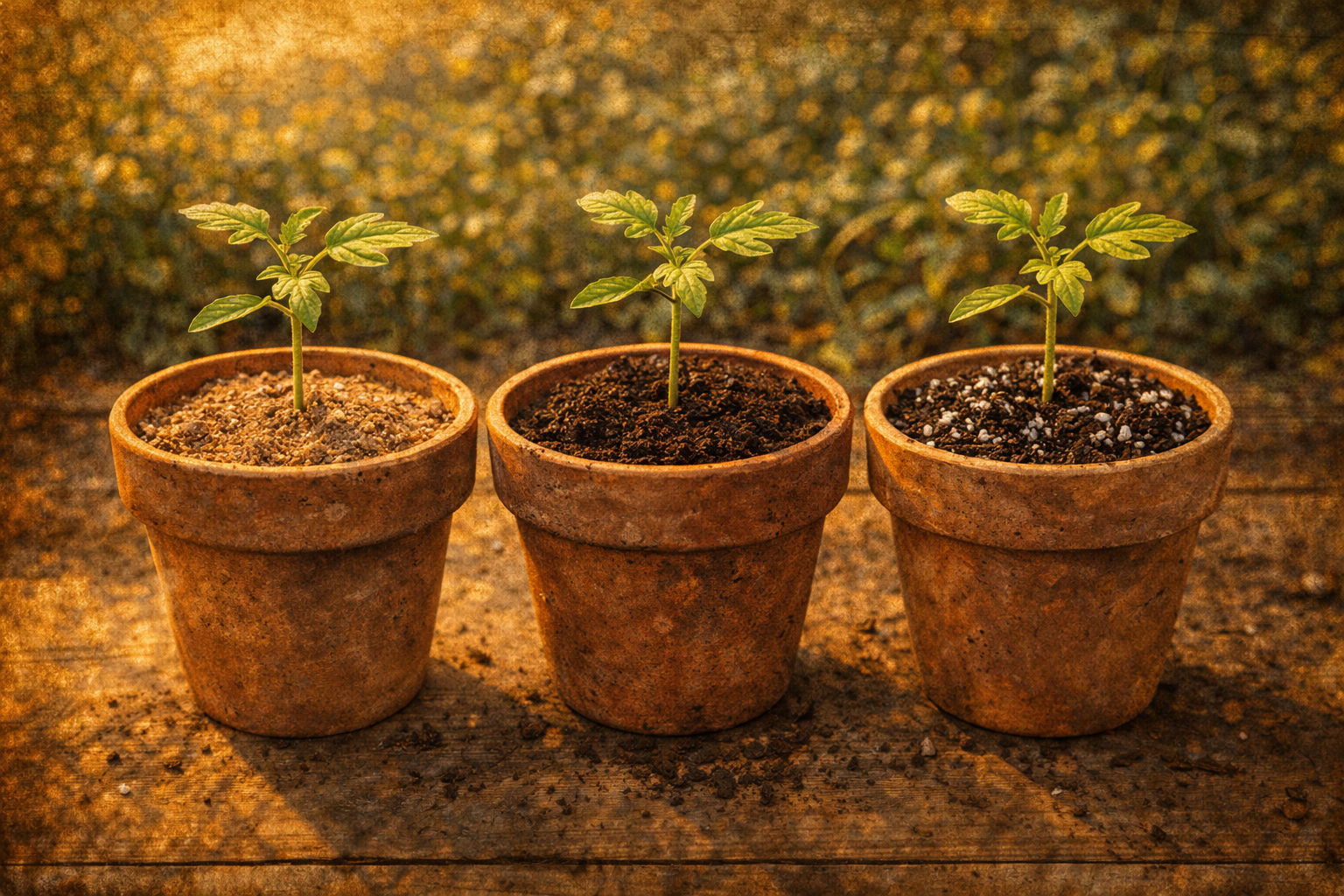
High peat vs low peat:
- High peat (light brown): more acidic pH 3.5–4.5, lighter, good for sowing and acid-loving plants
- Low peat (dark): more neutral pH, more fertile, for general use
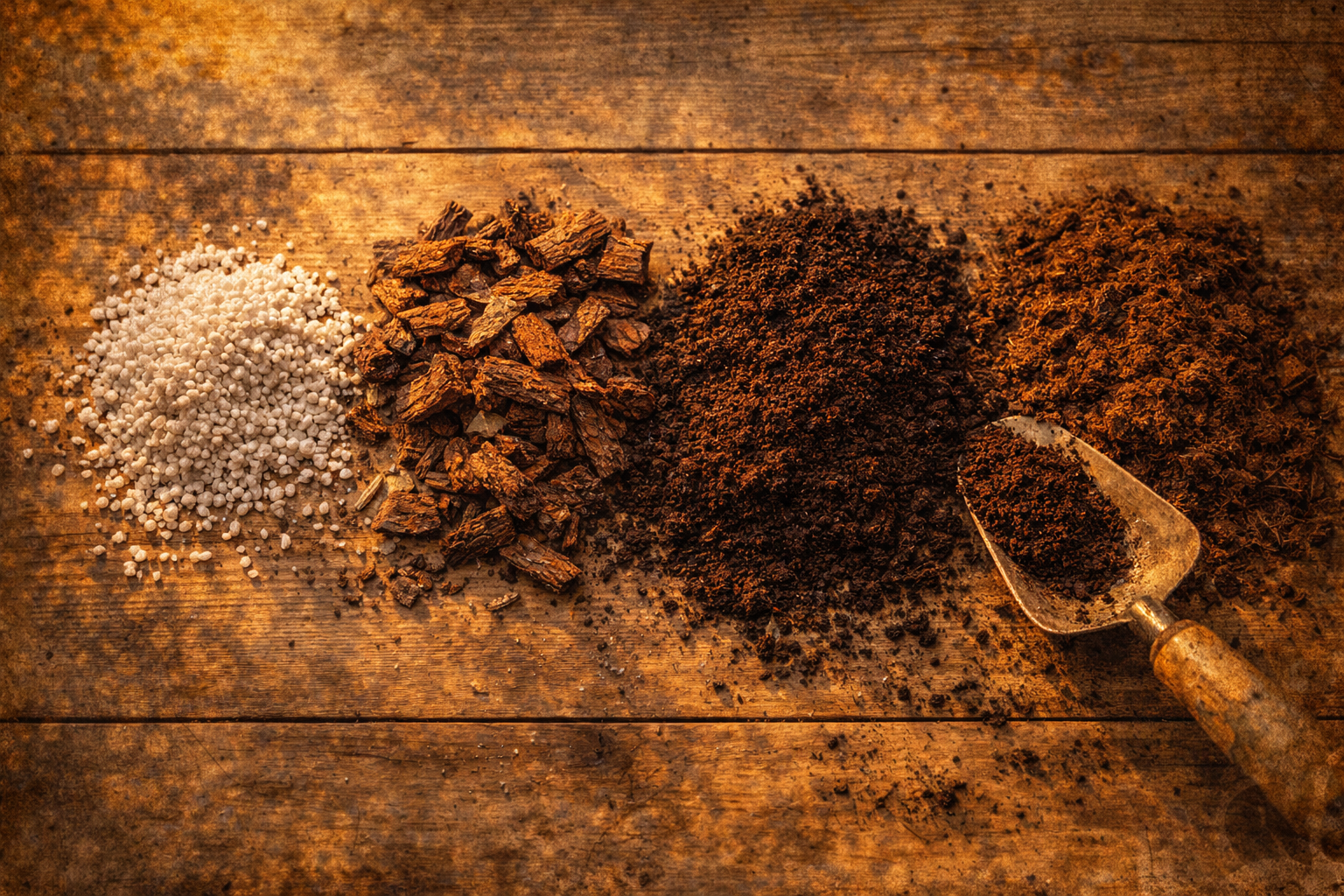
Perlite: White volcanic granules. Improve aeration and drainage. The more perlite, the looser and more permeable the substrate.
Quick cheat sheet:
- For sowing: light, pH 5.5–6.5, low NPK, lots of perlite
- For fruiting vegetables: pH 6–7, higher P and K
- For cacti and succulents: lots of perlite, pH 6–7
zielnamanufaktura.pl
Fotogalerij 3