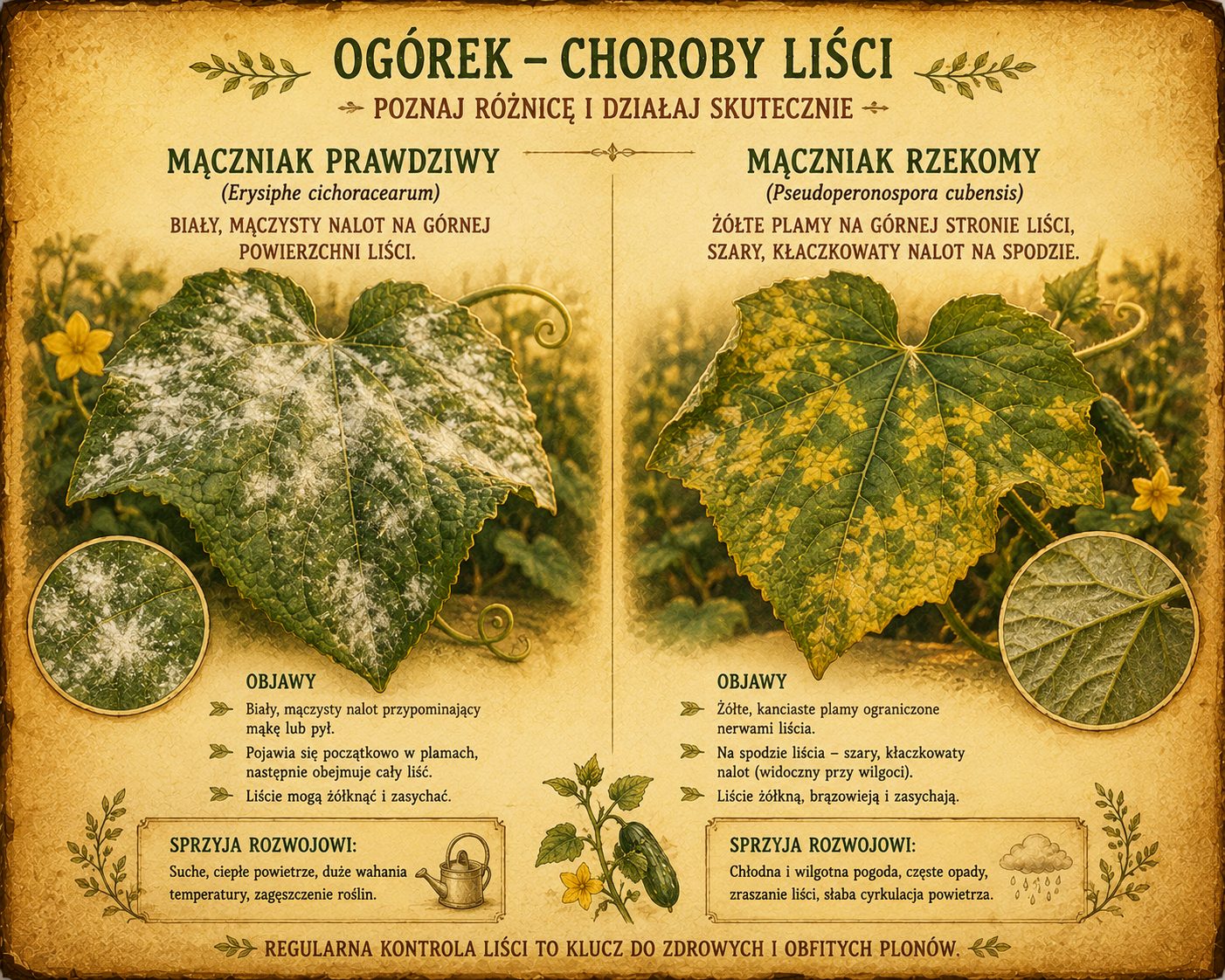
Late blight — how to recognize and can you save your tomatoes
Pe scurt: Late blight (Phytophthora infestans) destroys tomatoes and potatoes rapidly in wet years. Early recognition and quick response determine whether you can save the harvest.
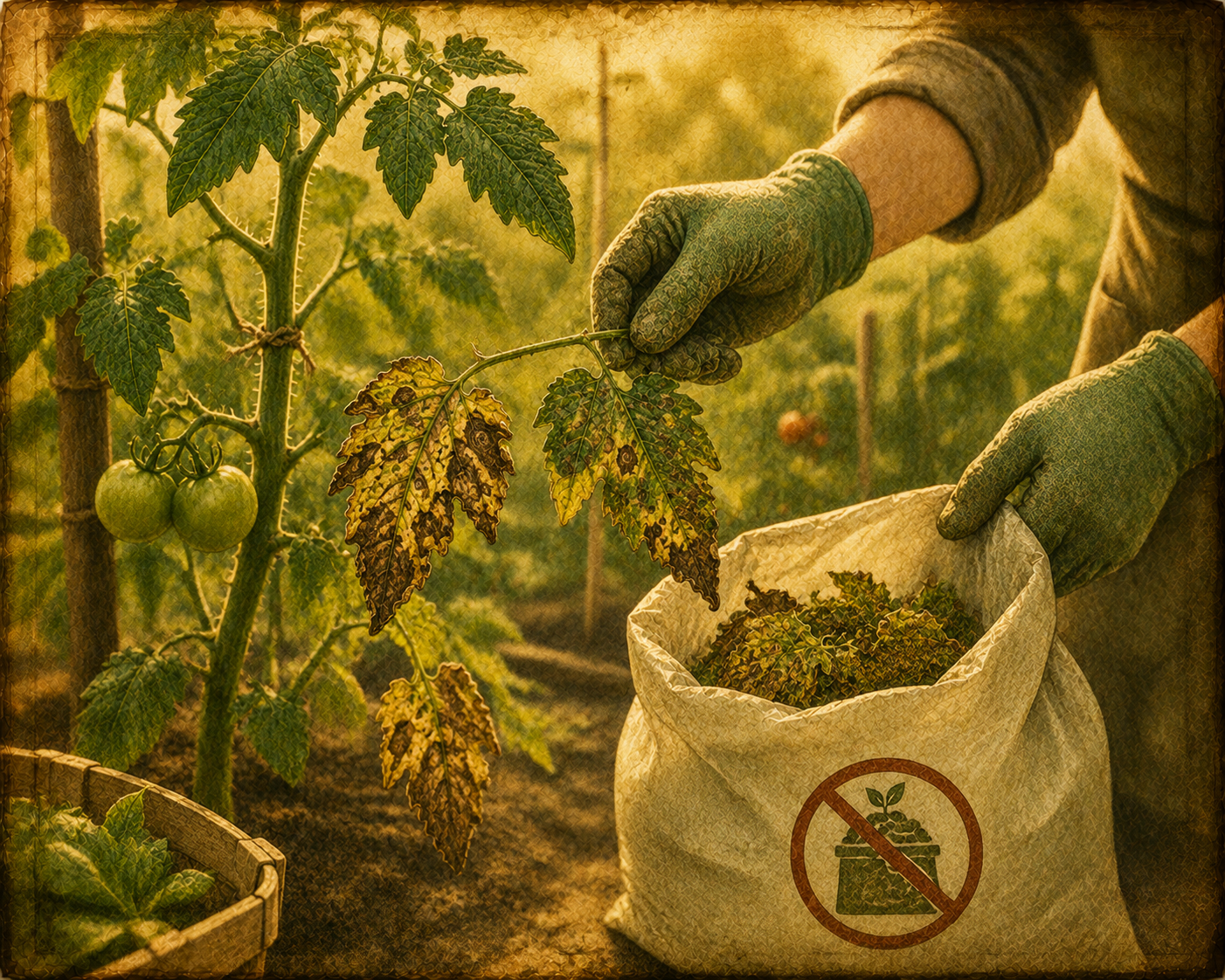
Late blight — quick diagnosis and action
Phytophthora infestans is a fungus that can destroy an entire tomato bed in 2–3 weeks during wet summers. It was the cause of the great famine in Ireland in the 19th century. In the garden, it's an equally serious threat.
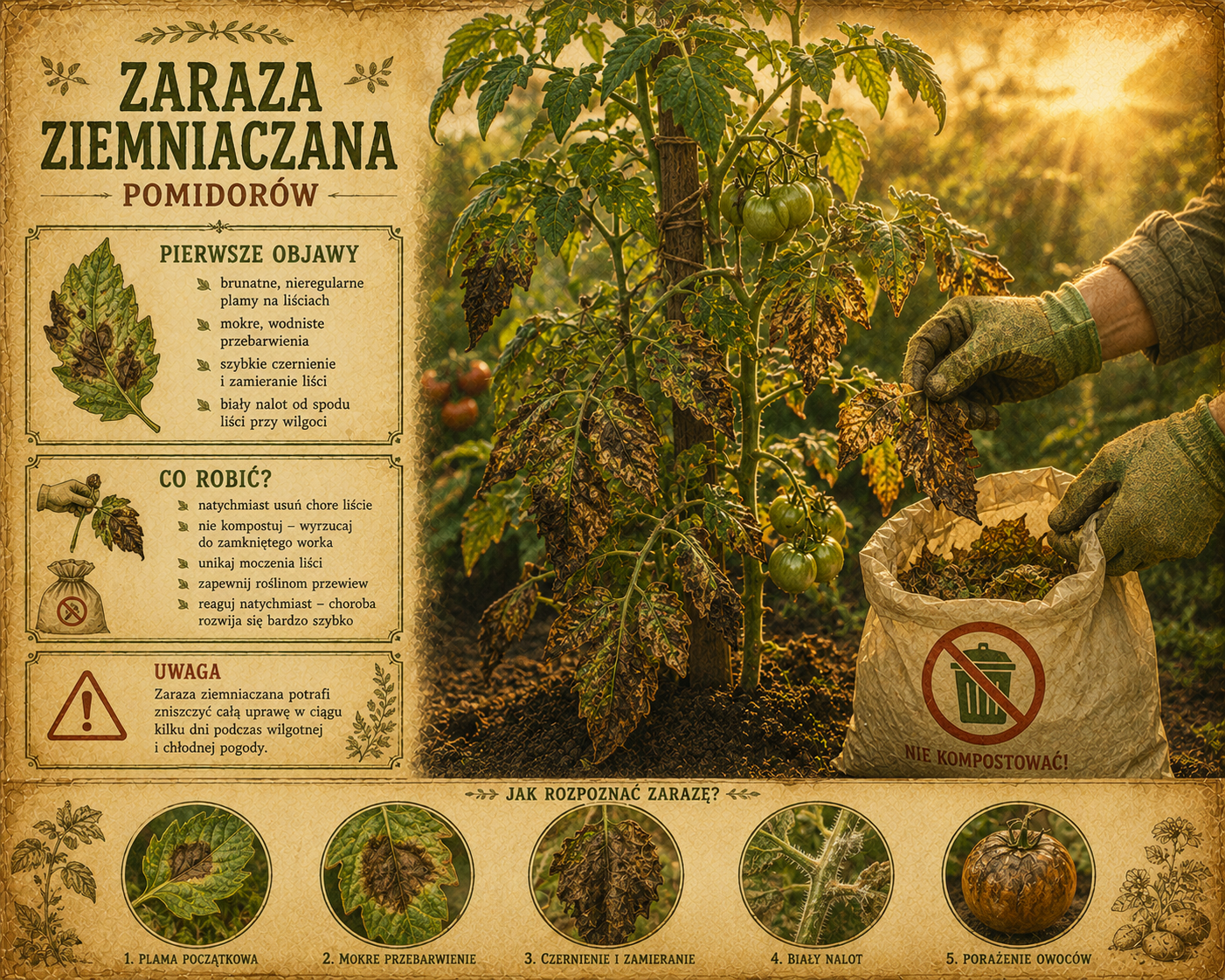
How to recognize:
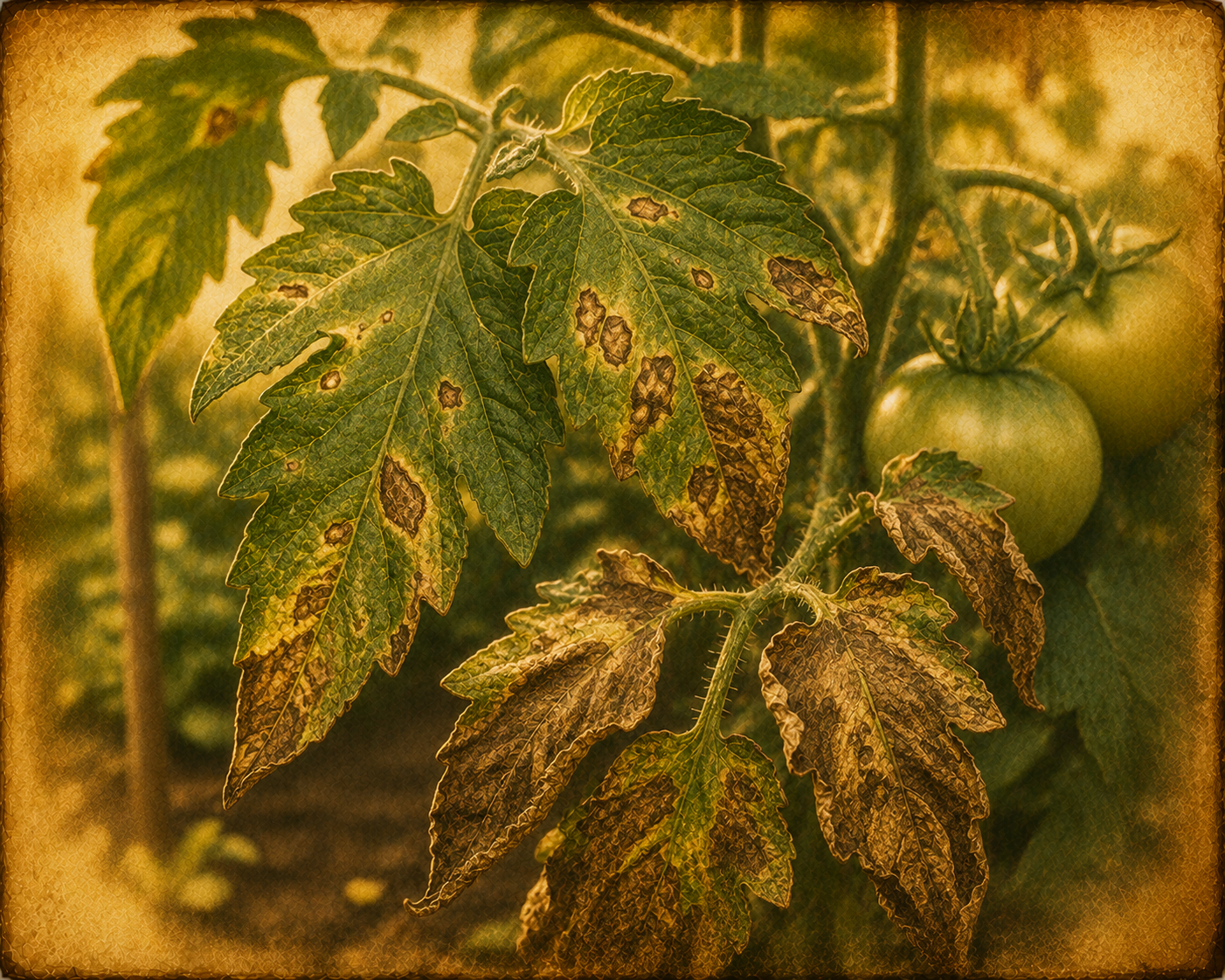
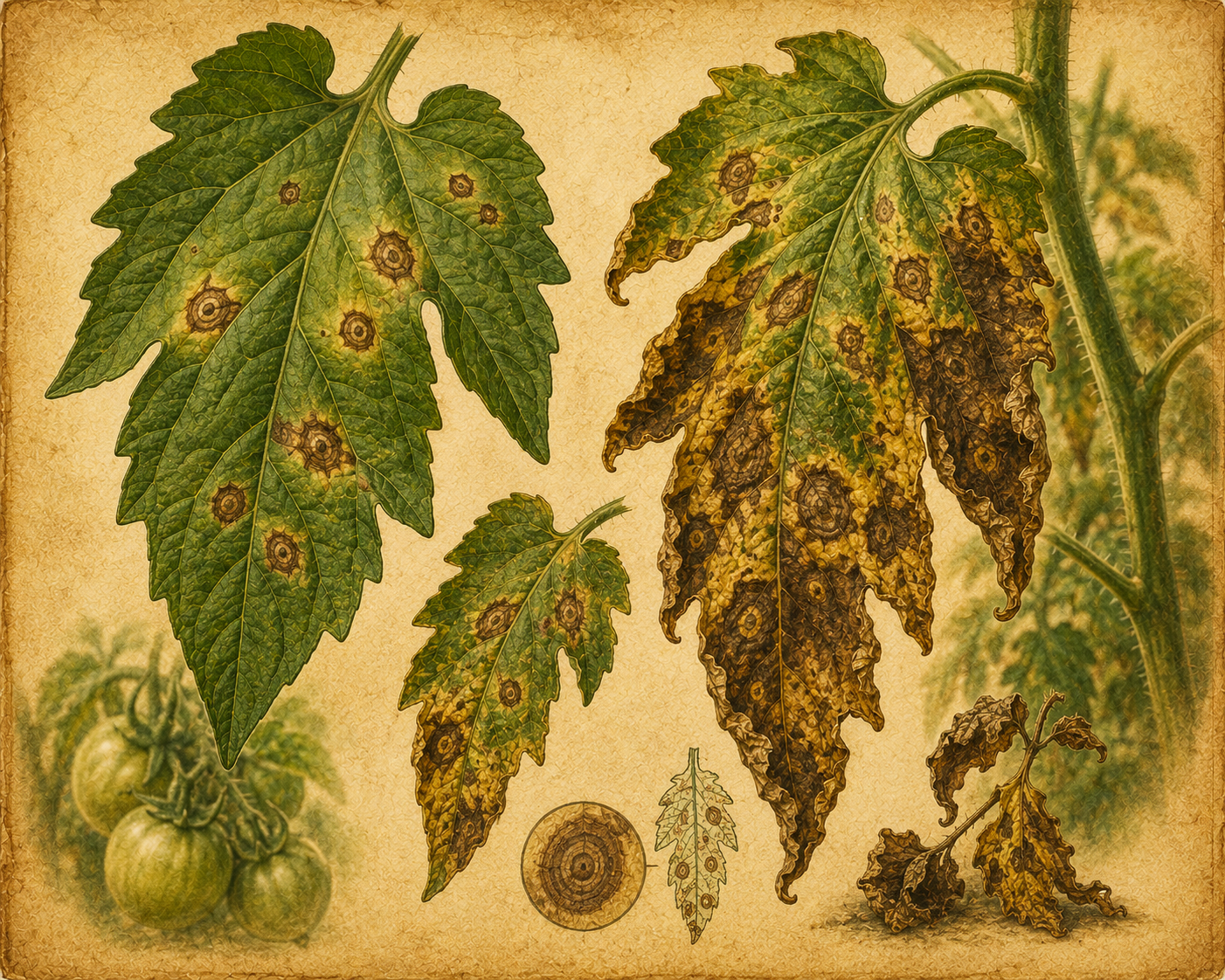
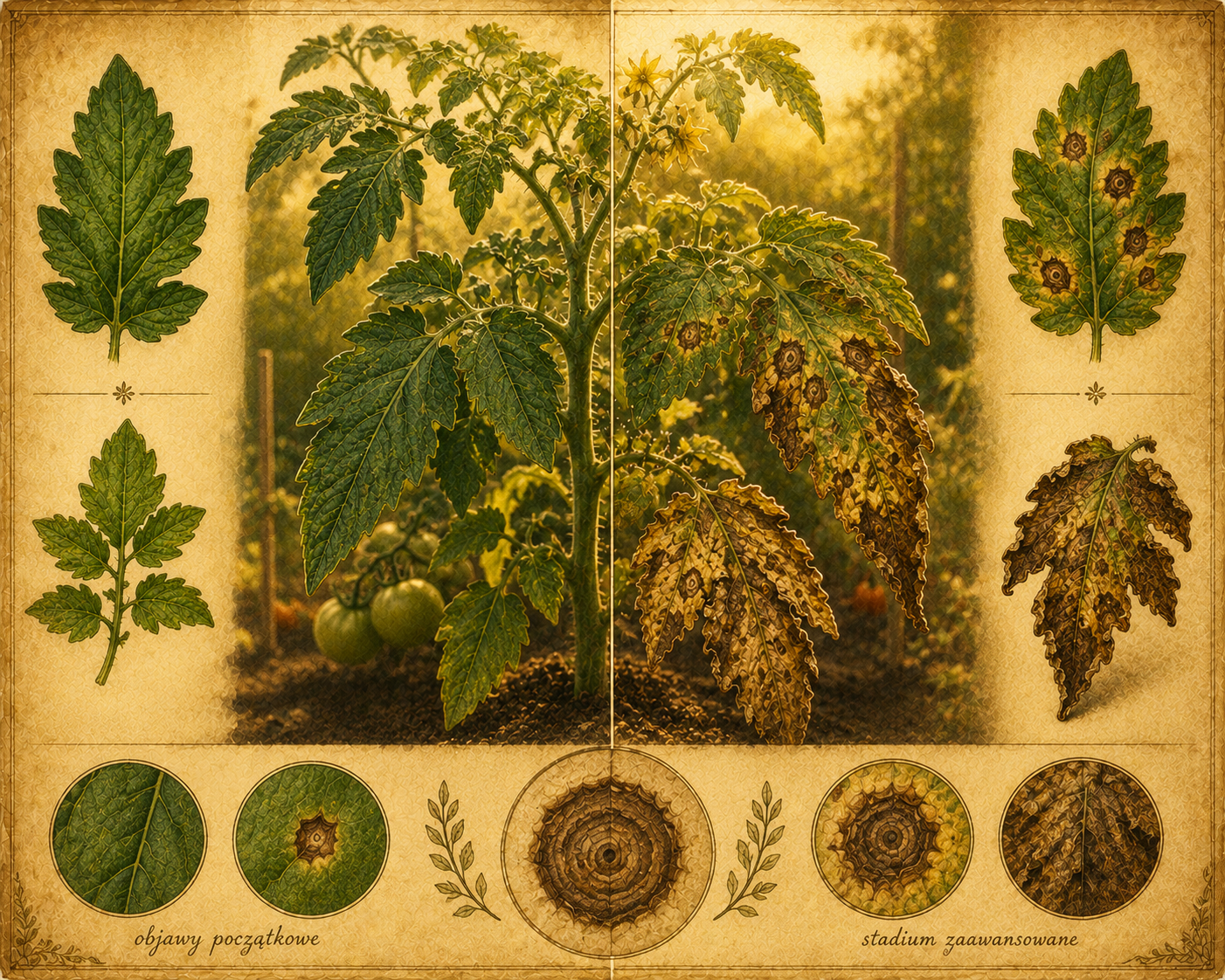
- Brown spots with greenish edges on leaves — starting on lower leaves
- In humid weather: white fluffy coating ON THE UNDERSIDE of spots
- Browning and rotting of stems
- Fruits with hard brown spots that rapidly expand
Conditions favoring blight:
- Temperatures 15–25°C
- Humidity above 90% for at least several hours
- Wet leaves
What to do when you notice first symptoms:
- Immediately remove diseased leaves (to trash, not compost)
- Spray with copper-based fungicide (Miedzian, Cuproflow) — stops spread
- Improve ventilation — remove leaves near ground so air circulates
- Stop watering leaves completely
Prevention:
- Plant in windy and sunny locations — dry leaves provide protection
- Growing under cover/polytunnel
- Resistant varieties e.g. Phantasia, Primabella
- Preventive spraying with copper fungicide every 10–14 days in wet years
zielnamanufaktura.pl
Galerie foto 4