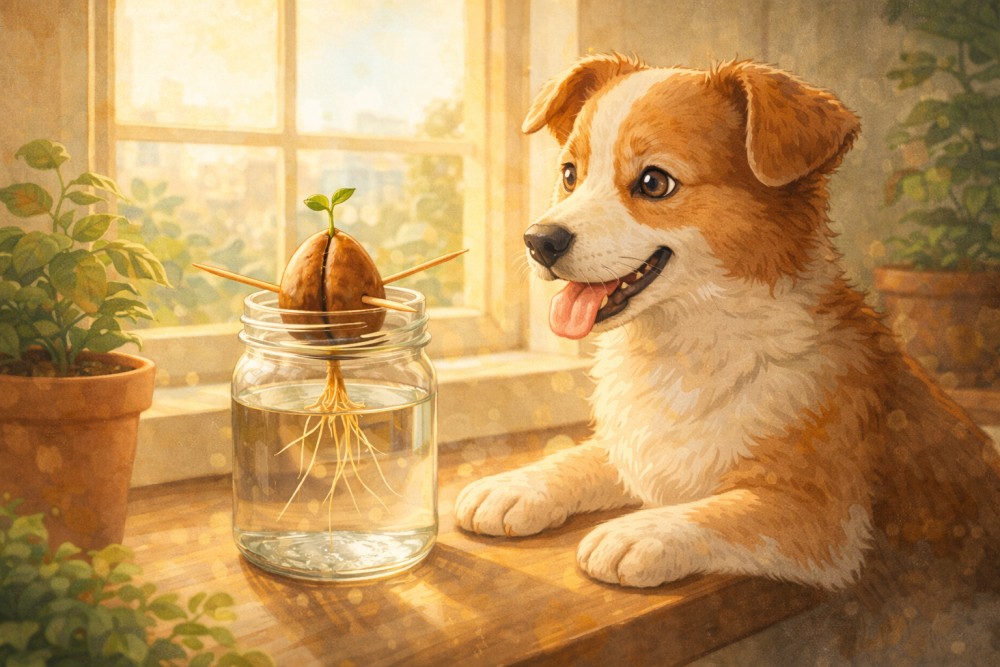
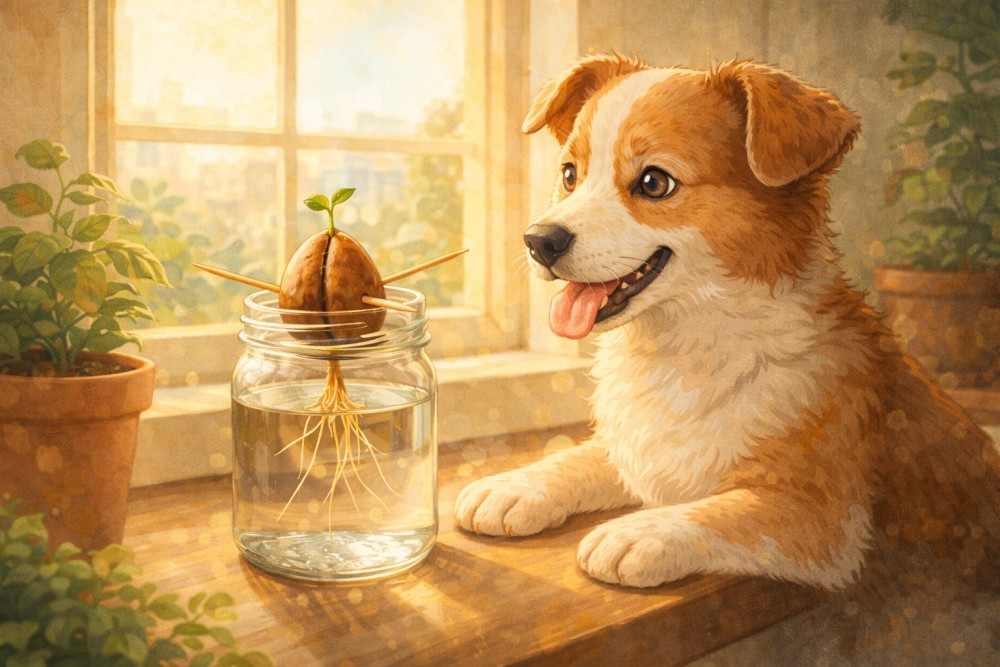
Tara, Tarnica and an avocado pit. How our home jungle began
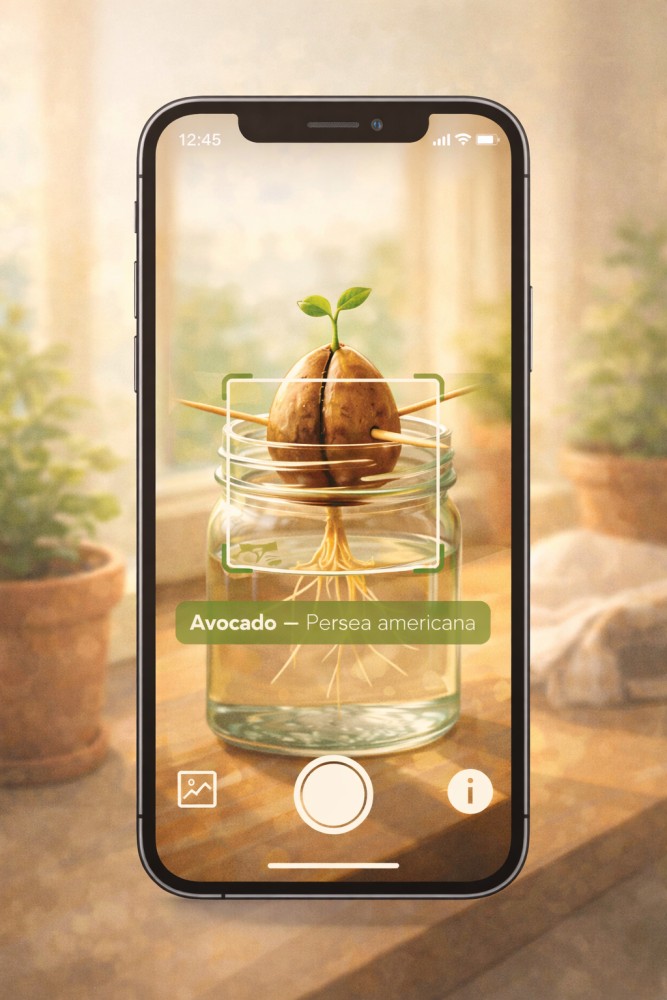
I bought an avocado at Biedronka for 3.50 PLN. Tara got the remnants scraped from the skins. Magda once again corrected me that it's not a kiwi. And the pit ended up on toothpicks over a jar — while cleaning up the excess jars in the kitchen.
MarekZ
Where did this idea even come from
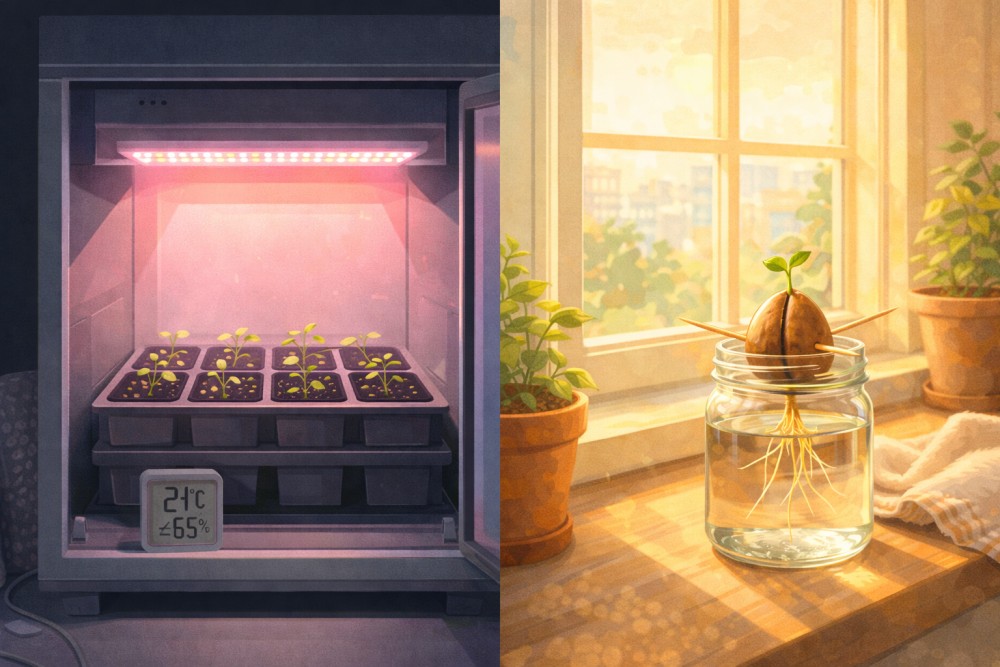
Actually, the avocado wasn't in the plan. I was organizing my seedlings — I have a growbox and just ordered another set of lights that will arrive after Easter, so I needed to make room for the new equipment. While at it, jars from the kitchen were put to use — they'd been waiting for their moment for months. I left three. Avocado pits were lying nearby. I connected the dots.
This is exactly the type of project that starts with "I have a moment and there happens to be a pit" — and suddenly you have a tree on your windowsill.
A problem that's been going on for years
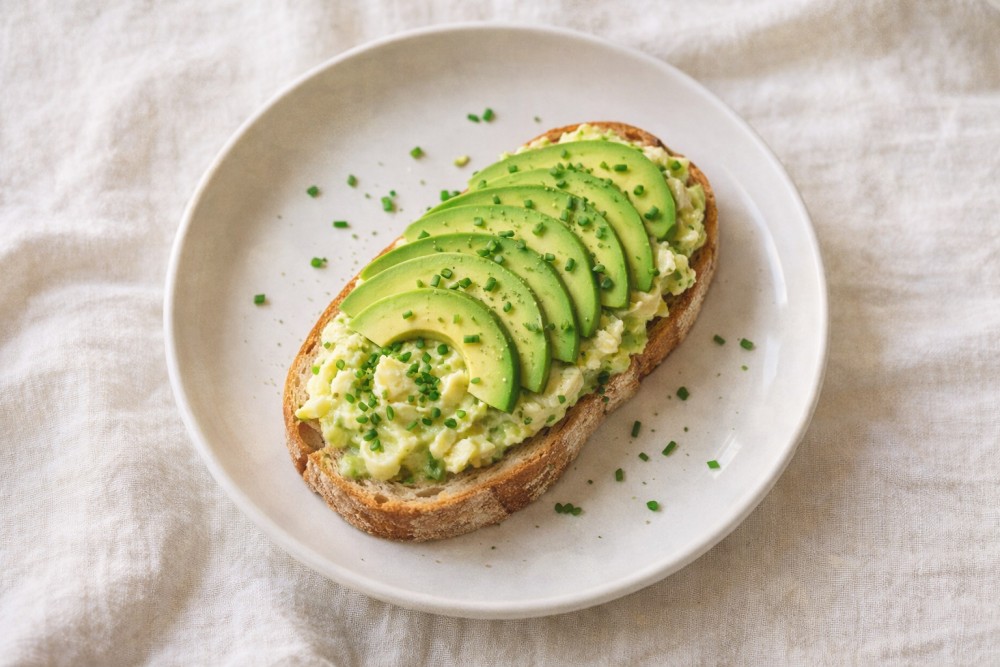
I have a certain defect. Every time I talk about Magda's egg salad sandwiches, I mention "kiwi". Meanwhile, Magda makes egg salad with avocado. Kiwi is a completely different plant — and a completely different fruit. Sounds simple? Apparently not for me, and not just recently.
That's why the species recognition function we're planning to add to our gardening app is more important to me than to anyone else in this house. I'll point at the jar with the pit and the app will tell me what's growing in it. Plant disease recognition is already available — just take a photo of a leaf. Species recognition is on the way. For me it's a priority, for Magda — a relief.
Application Plant disease recognition already works in the app — you take a photo of a leaf and check what's wrong with it. Species recognition function is in the plans. As soon as it's released, I'll be one of the first testers — for obvious reasons. |
How to grow an avocado from a pit
The pit must come from a ripe, healthy fruit — green skin, slightly soft to touch, without dark spots. After eating, wash and dry the pit thoroughly, without removing the brown skin — it's the natural protection of the seed.
The water method is the most popular and most spectacular:
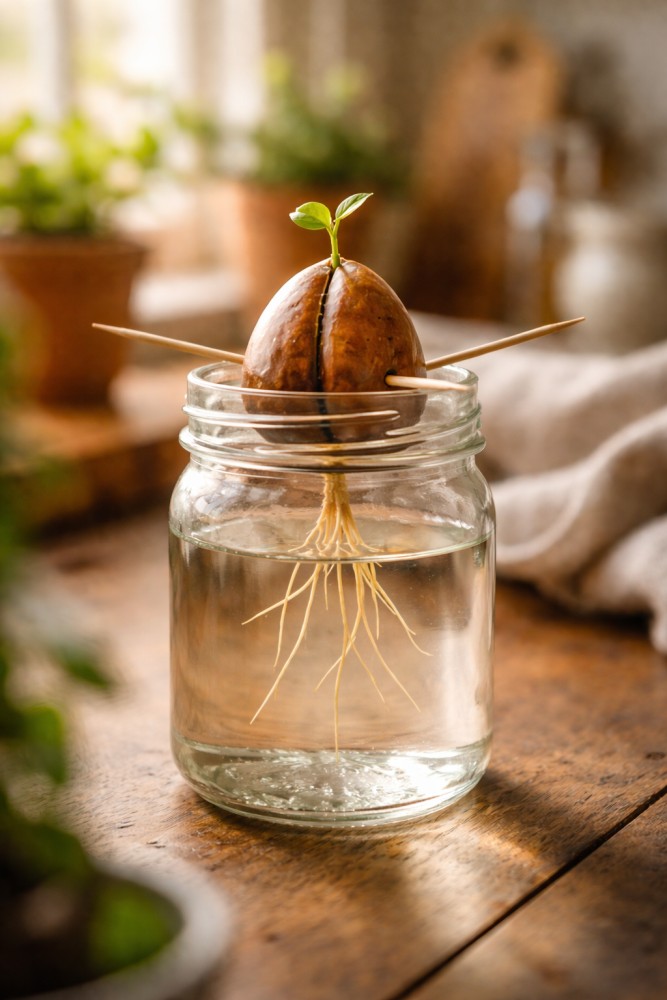
- Insert three toothpicks into the middle part of the pit at a slight angle, creating a tripod.
- Place the pit over a jar of water — pointed end up, bottom third submerged.
- Place in a bright spot, change water every 2–3 days.
- After 2–6 weeks the skin will start cracking, a root and shoot will appear.
- When the stem reaches about 15 cm — cut it in half. This forces branching.
- Transplant to a pot with a layer of expanded clay at the bottom and well-draining soil.
Avocado likes a bright spot without direct southern sun, warmth and regular watering — 2–3 times a week in summer, once in winter. There probably won't be fruits — it bears fruit after 4–6 years and needs a tropical climate. But as an ornamental plant it's really rewarding: it grows quickly and has beautiful, large, leathery leaves.
Tara and her premium snack
Our female dog is named Tara — after Tarnica, the highest peak of the Bieszczady Mountains, which she'll never climb because dogs are forbidden there. A metaphor for her entire life: ambitious name, hard limitations. But the flesh remnants scraped from the skins after peeling avocados are fully available — and she treats them as a top-class delicacy.
Note for dog owners Avocado flesh in small amounts is usually safe for dogs, but the skin and pit contain persin, which can harm them. Tara only gets trace remnants of flesh scraped from the skins — we don't give her the skins or pit. When in doubt, it's worth consulting with a veterinarian. |
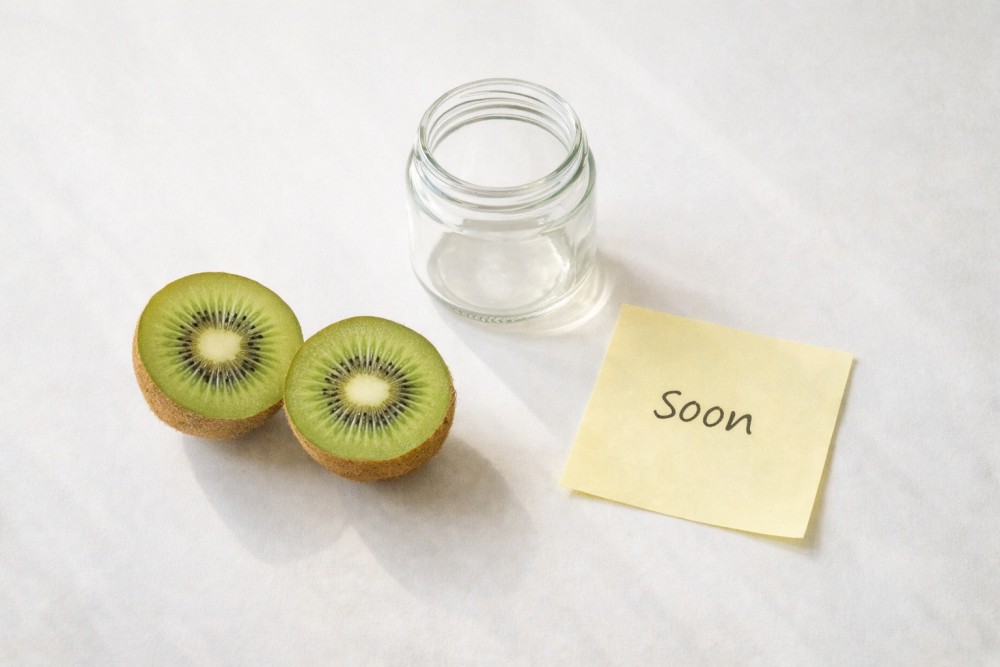
Kiwi — that's still just a plan
I have a second project in mind: kiwi from seeds. There's one problem — to grow kiwi, you first need to stop eating them whole. I eat kiwi with a spoon, without the fuzzy skin, and nothing ever remains. The seeds are tiny, sit in the flesh and need to be consciously extracted — by rinsing the flesh on a sieve under cold water, drying the seeds on a paper towel.
As soon as I manage to collect a few seeds — which mainly requires changing habits, not skills — I'll write a separate article. About how I didn't eat them. How I extracted them. And how the cultivation began.
Avocado and kiwi side by side on the windowsill would be perfect — and an excellent test for the species recognition function in the app, because then I'll really need help distinguishing what is what.
Preview Kiwi — coming soon. As soon as I don't eat the seeds. Keep your fingers crossed. |
Magda doesn't know about the kiwi plan yet. She'll find out when another jar appears in the kitchen.
Fotogalerij 7

Reacties 0
Nog geen reacties. Wees de eerste!